We have all heard that exercise is important. The problem is that telling someone to exercise and getting someone to e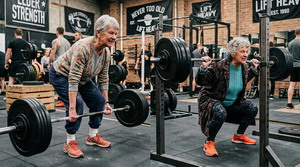 xercise are two completely different things. This is especially true for people who have spent decades being relatively inactive. For some people, the idea of going to a gym is almost enough to guarantee that the exercise program will never begin.
So let’s start with a different question: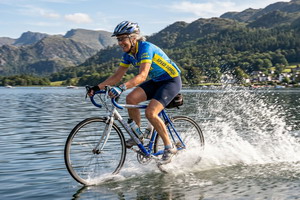
What exercise could you actually see yourself doing regularly?
There isn’t one “best” exercise. If your goal is to reduce visceral fat, improve insulin sensitivity, and maintain cardiovascular health, aerobic exercise is extremely useful.
But aerobic exercise can take many forms:
* brisk walking
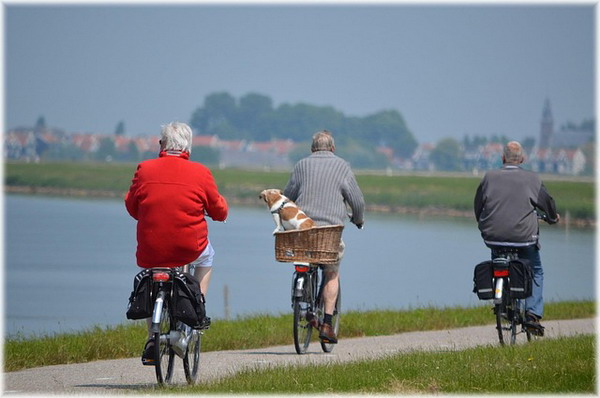
* cycling
* swimming
* water exercise
* dancing
* rebounding
* elliptical exercise
* other activities that keep you moving and raise your heart rate.
The best one isn’t necessarily the one that looks best on a fitness chart.
It is the one you will actually do.
If you enjoy swimming, swimming is an excellent aer obic exercise.
If you hate swimming but enjoy walking, walk.
If you enjoy rebounding and can do it safely, rebound.
The body responds to the work—not to the name of the exercise.
Why aerobic exercise matters for visceral fat
As we age, we can lose muscle while gaining fat aroun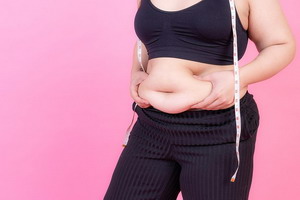 d our internal organs.
This visceral fat is metabolically active and is associated with insulin resistance, fatty liver, inflammation, and cardiovascular risk. Aerobic exercise can help reduce visceral fat and improve insulin sensitivity.
Resistance exercise is important because it helps preserve muscle. The two therefore have different but complementary jobs:
Aerobic exercise helps improve the metabolic environment.
Resistance exercise helps preserve the metabolic machinery—your muscles.
For many older adults, we need both.
You don’t need to exercise for an hour.
This is where exercise science has changed considerably. Exercise does not have to occur in one long, uninterrupted session to be useful. Researchers are increasingly studying something called exercise snacks: short bouts of move ment performed throughout the day.
A few minutes of brisk walking, stair climbing, cycling, or simple bodyweight exercise can be repeated several times throughout the day.
Recent research suggests that these brief bouts can improve cardiorespiratory fitness and muscular endurance, particularly in people who are initially inactive. This is extremely encouraging for people who find the idea of a 30- or 45-minute workout overwhelming.
Instead of:
“I have to exercise for 45 minutes.”
try:
“I can move for three minutes.”
Then do it again later.
And again.
Walking after meals
There is another simple strategy that can be particula rly useful for people with insulin resistance.
Try walking for 10–15 minutes after eating.
Muscle contraction helps move glucose out of the bloodstream and into muscle cells.
So you might think of post-meal walking as a way of helping your body handle the meal you just ate.
It doesn’t replace longer aerobic exercise.
It complements it.
What if you have access to a pool?
Swimming and water exercise can be particularly valuable
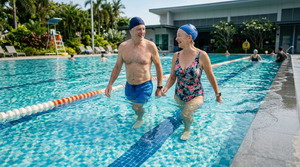 for people with arthritis, excess weight, or other conditions that make weight-bearing exercise uncomfortable.
The water supports much of your body weight while allowing you to exercise your heart and muscles.
Swimming can provide a substantial aerobic workout.
Gentle water exercise may provide less cardiovascular stimulation but can still be an excellent way to get moving.
And if swimming is seasonal where you live, that’s fine.
Your exercise doesn’t have to be the same year-round.
You might swim during the warmer months and walk, cycle, dance, or rebound during the rest of the year.
What about rebounding?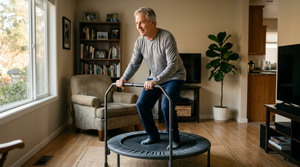
Rebounding—using a small mini-trampoline—can provide a surprisingly vigorous aerobic workout.
The research specifically examining visceral-fat reduction from rebounding is much more limited than the research on aerobic exercise in general.
But that doesn’t mean rebounding can’t be useful.
If it safely raises your heart rate and you enjoy doing it, it can be a legitimate aerobic activity.
Again:
The exercise you actually perform beats the theoreti cally perfect exercise you never do.
Start below your limit.
This may be the most important advice of all. If you have been inactive for years, don’t begin by trying to prove that you can exercise like a 30-year-old.
Start with something that feels almost too easy.
Five minutes.
Two minutes.
One trip around the block.
A few chair stands.
A few minutes in the pool.
Then repeat it tomorrow.
The objective is not to exhaust yourself.
The objective is to build the habit of moving.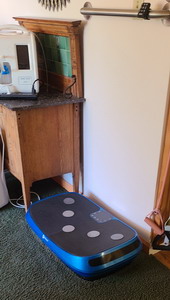
Once movement becomes normal, increasing the dose becomes much easier.
And there is another tool that may help people take that very first step—particularly those who have become extremely sedentary.
It is called whole-body vibration. More on this next week!
David
It has been ages since I have been able to sit down with Ellen
and watch a movie at home. Well it is finally happening. It may be a small step, but it means a lot to me that we are starting to get back to normal life.