New research is reshaping how scientists think ab out dementia, and pointing toward practical steps you can take today. For decades, Alzheimer’s disease research focused almost entirely on one culprit: sticky clumps of protein called amyloid plaques that accumulate in the brain. Billions of dollars were spent developing drugs to clear these plaques — yet patients rarely improved. Something important was being missed. out dementia, and pointing toward practical steps you can take today. For decades, Alzheimer’s disease research focused almost entirely on one culprit: sticky clumps of protein called amyloid plaques that accumulate in the brain. Billions of dollars were spent developing drugs to clear these plaques — yet patients rarely improved. Something important was being missed.
Whether your goal is maintaining muscle, recovering from illness, losing weight, preserving bone health, or simply staying strong and independent, your body depends on a steady supply of the essential amino acids proteins are made from.
Now, a convergence of new findings is building a very different picture. Alzheimer’s may be, at its root, an energy c risis — a slow failure of the brain’s power supply that begins many years before memory problems appear. The plaques, by this account, may be a symptom of a struggling brain, not the original cause of the struggle. risis — a slow failure of the brain’s power supply that begins many years before memory problems appear. The plaques, by this account, may be a symptom of a struggling brain, not the original cause of the struggle.
The key findings:
The brain runs out of fuel — silently, and early.
The brain is extraordinarily energy-hungry. Though it makes up only about 2% of body weight, it consumes roughly 20% of the body’s energy. That energy comes almost entirely from glucose (sugar), and the process of converting glucose into usable power happens inside tiny structures in every brain cell called mitochondria.
Using PET scans that track how actively the brain is b urning glucose, researchers have repeatedly found that in people who will later develop Alzheimer’s, the brain’s energy use begins to fall — not after symptoms appear, but up to 15–20 years before. In one large study of nearly 5,000 people, those with the lowest brain glucose metabolism at the start of the study were significantly more likely to develop Alzheimer’s over the following decade. In mice, the brain’s key energy molecule (NAD+) declines 30-45% as Alzheimer’s progresses. A key finding is that even though the brain is failing to use glucose for energy, it can still use ketones from fat burning for energy. urning glucose, researchers have repeatedly found that in people who will later develop Alzheimer’s, the brain’s energy use begins to fall — not after symptoms appear, but up to 15–20 years before. In one large study of nearly 5,000 people, those with the lowest brain glucose metabolism at the start of the study were significantly more likely to develop Alzheimer’s over the following decade. In mice, the brain’s key energy molecule (NAD+) declines 30-45% as Alzheimer’s progresses. A key finding is that even though the brain is failing to use glucose for energy, it can still use ketones from fat burning for energy.
A molecule called NAD+ may be central to mitochondria.
This molecule acts as the spark plug that keeps energy production running. In December 2025, research ers at Case Western Reserve University published a landmark study in the journal Cell Reports Medicine. ers at Case Western Reserve University published a landmark study in the journal Cell Reports Medicine.
In mouse models of Alzheimer’s, researchers observed a significant decline in NAD+ levels in the brain, dropping by 30% when cognitive problems first appeared and further decreasing to 45% in advanced disease stages.
When the researchers restored NAD+ balance usin g a drug called P7C3-A20, something remarkable happened: the mice recovered fully. Their memory tests returned to normal. Their blood-brain barriers were repaired. A key clinical marker of the disease — called p-tau217, which is now used in human diagnosis — fell back toward normal levels. g a drug called P7C3-A20, something remarkable happened: the mice recovered fully. Their memory tests returned to normal. Their blood-brain barriers were repaired. A key clinical marker of the disease — called p-tau217, which is now used in human diagnosis — fell back toward normal levels.
“The damaged brain can, under some conditions, repair itself and regain function.” — Dr. Andrew Pieper, Case Western Reserve University
Critically, the amyloid plaques were not fully clear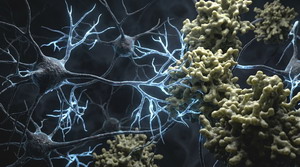 ed — yet the animals recovered anyway. This matches a puzzling group of humans who have also been discovered: people whose brains at autopsy are full of amyloid plaques, yet who were mentally sharp until they died. These individuals, known as “non-demented with Alzheimer’s neuropathology,” turn out to have naturally higher levels of the enzymes that produce NAD+. Their brains were apparently resilient enough to tolerate the plaques. ed — yet the animals recovered anyway. This matches a puzzling group of humans who have also been discovered: people whose brains at autopsy are full of amyloid plaques, yet who were mentally sharp until they died. These individuals, known as “non-demented with Alzheimer’s neuropathology,” turn out to have naturally higher levels of the enzymes that produce NAD+. Their brains were apparently resilient enough to tolerate the plaques.
The insulin connection — “type 3 diabetes”
A parallel line of research has shown that Alzheim er’s brains consistently show signs of insulin resistance — the same metabolic problem that underlies type 2 diabetes, but confined to brain tissue. When neurons become resistant to insulin, they can no longer take up glucose properly, starving themselves of energy. Some researchers have begun calling this pattern “type 3 diabetes.” The brain’s top genetic risk factor for Alzheimer’s, a gene variant called ApoE4, directly impairs the mitochondria — producing lower energy output and higher levels of cellular damage. er’s brains consistently show signs of insulin resistance — the same metabolic problem that underlies type 2 diabetes, but confined to brain tissue. When neurons become resistant to insulin, they can no longer take up glucose properly, starving themselves of energy. Some researchers have begun calling this pattern “type 3 diabetes.” The brain’s top genetic risk factor for Alzheimer’s, a gene variant called ApoE4, directly impairs the mitochondria — producing lower energy output and higher levels of cellular damage.
The ketone loophole
One of the most telling discoveries is what the Alzheimer’s brain can still use for fuel. While glucose uptake is impaired, the brain retains its ability to burn ketones — an alternative fuel produced naturally during fasting or when dietary carbohydrates are reduced. Clinical trials have shown that supplementing the diet with MCT oil (a readily available fat that the body converts to ketones) produces modest but real improvements in memory tests in people with early Alzheimer’s and mild cognitive impairment. The fact that bypassing the glucose pathway at all helps is strong evidence that the energy shortage — not just the plaques — is driving the cognitive decline.
What this means for you –
Practical steps worth taking
The scientific community is still exploring this area, and none of these findings have yet been proven to be effective treatments for Alzheimer’s in humans. However, the evidence is consistent enough to suggest that the following approaches are reasonable, low-risk, and supported by multiple independent lines of research.
Protect your brain’s energy supply through metabolic health
Insulin resistance, the same condition that leads to type 2 diabetes, seems to deplete brain cells of energy decades before Alzheimer’s symptoms manifest. To combat this, consider reducing refined carbohydrates and sugar intake, maintaining a healthy weight, and engaging in regular physical activity. Exercise directly enhances mitochondrial function and stimulates the production of a brain growth factor called BDNF. Additionally, regular fasting blood sugar and insulin checks can be beneficial. Some researchers suggest that even a 12-hour overnight fast most nights may help maintain insulin sensitivity and encourage the brain to utilize ketones as an alternative fuel source. Before making significant dietary changes, consult your doctor. type 2 diabetes, seems to deplete brain cells of energy decades before Alzheimer’s symptoms manifest. To combat this, consider reducing refined carbohydrates and sugar intake, maintaining a healthy weight, and engaging in regular physical activity. Exercise directly enhances mitochondrial function and stimulates the production of a brain growth factor called BDNF. Additionally, regular fasting blood sugar and insulin checks can be beneficial. Some researchers suggest that even a 12-hour overnight fast most nights may help maintain insulin sensitivity and encourage the brain to utilize ketones as an alternative fuel source. Before making significant dietary changes, consult your doctor.
Prioritize sleep, stress reduction, and toxin awareness.
Sleep is a time when the brain’s glymphatic system c leans out waste, including proteins that form plaques. Chronic poor sleep is one of the strongest modifiable risk factors for Alzheimer’s. Chronic psychological stress increases cortisol, which affects mitochondrial function and triggers brain inflammation. Researchers like Dr. Dale Bredesen also highlight the importance of identifying and reducing exposure to environmental toxins, especially mold (mycotoxins), heavy metals, and air pollution. These toxins seem to contribute to a specific type of Alzheimer’s through neuroinflammation. If you suspect significant toxin exposure, consult your physician. leans out waste, including proteins that form plaques. Chronic poor sleep is one of the strongest modifiable risk factors for Alzheimer’s. Chronic psychological stress increases cortisol, which affects mitochondrial function and triggers brain inflammation. Researchers like Dr. Dale Bredesen also highlight the importance of identifying and reducing exposure to environmental toxins, especially mold (mycotoxins), heavy metals, and air pollution. These toxins seem to contribute to a specific type of Alzheimer’s through neuroinflammation. If you suspect significant toxin exposure, consult your physician.
What the Human Clinical Evidence Shows for NAD+ Precursors
The human data is promising but still early. In mouse models of Alzheimer’s, Nicotinamide Riboside improves performance in behavioral tests, restores hippocampal synaptic plasticity, and reduces amyloid and phosphorylated tau pathology. Early-phase human studies have shown NR treatment is well-tolerated in adults and older adults with mild cognitive impairment. Apollo Health
A 2025 clinical trial at the University of Delaware gave NR (500mg twice daily) to 52 older adults with mild cognitive impairment. Blood NAD+ levels nearly doubled in the NR group compared to placebo. Those on NR also showed increased blood flow to the left hippocampus — the brain’s memory center. However, this did not translate into measurable improvement on memory tests over the 12-week study period. That last point is important: better blood flow to the hippocampus is a biological signal worth noting, but 12 weeks may simply be too short a timeframe to see cognitive benefits, and the study was small. NR (500mg twice daily) to 52 older adults with mild cognitive impairment. Blood NAD+ levels nearly doubled in the NR group compared to placebo. Those on NR also showed increased blood flow to the left hippocampus — the brain’s memory center. However, this did not translate into measurable improvement on memory tests over the 12-week study period. That last point is important: better blood flow to the hippocampus is a biological signal worth noting, but 12 weeks may simply be too short a timeframe to see cognitive benefits, and the study was small.
The emerging picture from all this research is genuin ely hopeful. If Alzheimer’s is driven by an energy crisis that starts decades before symptoms appear, then the window for intervention is long. Moreover, the tools—metabolic health, sleep, exercise, and diet—are largely within our own control. The plaques may indicate that the brain has been struggling for years. The question that deserves our attention is: what can we do to ensure that it never reaches that point? ely hopeful. If Alzheimer’s is driven by an energy crisis that starts decades before symptoms appear, then the window for intervention is long. Moreover, the tools—metabolic health, sleep, exercise, and diet—are largely within our own control. The plaques may indicate that the brain has been struggling for years. The question that deserves our attention is: what can we do to ensure that it never reaches that point?
Take care,
David
Images produced in Google Flow
Ellen
Here we see Ellen and I at Sutter Imaging. We were th ere to get an X-ray of her painful hip. Wednesday we finally saw the surgeon, and as expected he told Ellen she needs a new hip. Her MRI did not tell him what the bone shape was clearly enough to fit her with a replacement, hence the X-ray. He said it would take a couple months to fit her in the surgery schedule. However later that day his scheduler set Ellen up with a surgery date in two weeks. So I will be closed Thursday the 25th to take Ellen in for hip replacement surgery! ere to get an X-ray of her painful hip. Wednesday we finally saw the surgeon, and as expected he told Ellen she needs a new hip. Her MRI did not tell him what the bone shape was clearly enough to fit her with a replacement, hence the X-ray. He said it would take a couple months to fit her in the surgery schedule. However later that day his scheduler set Ellen up with a surgery date in two weeks. So I will be closed Thursday the 25th to take Ellen in for hip replacement surgery!
Strength training reduces dementia
Research has shown that folks that engage in 90 to  120 minutes of moderate resistance training per week were much less likely to develop neurologic diseases. 120 minutes of moderate resistance training per week were much less likely to develop neurologic diseases.
More
___________________________ |



 tly, frequent daytime napping, or persistent insomnia alter your brain and make it much more likely to develop dementia.