Last week I wrote about a pattern I see constantly in patients: a lot of the emotional tension they carry in their should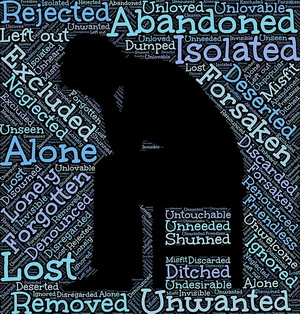 ers, jaw, low back, and gut isn’t really about disagreement itself. It’s about the fear underneath it — that if you don’t come around to someone else’s way of seeing things, they’ll pull away from you. I offered a question to ask yourself in the moment: is this person actually going to withdraw from me, or am I bracing for an exile that isn’t actually coming? ers, jaw, low back, and gut isn’t really about disagreement itself. It’s about the fear underneath it — that if you don’t come around to someone else’s way of seeing things, they’ll pull away from you. I offered a question to ask yourself in the moment: is this person actually going to withdraw from me, or am I bracing for an exile that isn’t actually coming?
That question is a good start, but a question alone doesn’t retrain a nervous system. The same way I’d give you a stren gthening exercise for a weak low back, or a breathing pattern to settle your vagus nerve before a meal, releasing this kind of muscular bracing responds to practice, not just insight. You don’t get a strong back by understanding anatomy. You get one by doing the right exercises, repeatedly, until the new pattern is the one your body reaches for automatically. gthening exercise for a weak low back, or a breathing pattern to settle your vagus nerve before a meal, releasing this kind of muscular bracing responds to practice, not just insight. You don’t get a strong back by understanding anatomy. You get one by doing the right exercises, repeatedly, until the new pattern is the one your body reaches for automatically.
So here are two exercises. One is for how you bring your own differences to other people, so it lands more like information and less like a threat to the relationship. The other is for what to do with your own body when someone else’s difference shows up and your old wiring wants to push it away.
Exercise One: Saying Your Piece Without Triggering Their Alarm
When you need to say something a person close to you won’t agree with, most of the tension in the room comes fro m one unspoken question running in the background of their mind: does this mean I’m losing you? You can answer that question directly, instead of leaving them to guess at it, and it changes almost everything about how the conversation goes. m one unspoken question running in the background of their mind: does this mean I’m losing you? You can answer that question directly, instead of leaving them to guess at it, and it changes almost everything about how the conversation goes.
Say the bond out loud before you say the disagreement. Don’t assume it’s obvious. A short, plain sentence — “This isn’t going to change how I feel about you” — does real physiological work. It gives the other person’s nervous system the “all clear” signal before you give them anything to disagree with.
One caution here: the words only do this work if the r est of you is saying the same thing. Most of what we communicate to each other isn’t carried in the sentence itself — it’s carried in posture, breath, tone of voice, facial expression, where your eyes go. If you say “this won’t change how I feel about you” while your jaw is tight, your shoulders are up, and your voice is clipped, the other person’s nervous system will believe your body, not your words. So before you say the bond out loud, it’s worth taking a breath, dropping your shoulders, and unclenching your jaw — settling your own system first, rather than trying to sound calm while still braced underneath. The calm in your voice and face should be a side effect of an actually settled body, not a performance laid over a tense one. (This is rich enough a subject that I’ll be giving it its own newsletter shortly.) est of you is saying the same thing. Most of what we communicate to each other isn’t carried in the sentence itself — it’s carried in posture, breath, tone of voice, facial expression, where your eyes go. If you say “this won’t change how I feel about you” while your jaw is tight, your shoulders are up, and your voice is clipped, the other person’s nervous system will believe your body, not your words. So before you say the bond out loud, it’s worth taking a breath, dropping your shoulders, and unclenching your jaw — settling your own system first, rather than trying to sound calm while still braced underneath. The calm in your voice and face should be a side effect of an actually settled body, not a performance laid over a tense one. (This is rich enough a subject that I’ll be giving it its own newsletter shortly.)
Offer your view as your own experience, not as the truth they’re missing. “I’ve come to see it this way” sits very differently in someone’s body than “the truth is.” The first leaves roo m for both of you to stay exactly who you are. The second quietly asks them to close the gap by becoming more like you — which is the very thing that puts people on guard. m for both of you to stay exactly who you are. The second quietly asks them to close the gap by becoming more like you — which is the very thing that puts people on guard.
Ask a real question before you make your case. Curiosity, genuinely held, signals you’re not trying to absorb or convert them. It also tends to lower the temperature in the room before you’ve said a single thing about your own view.
Say it once, and let it rest. If you’ve stated your honest position clearly, repeating it in every future conversation re ads as pressure, even delivered gently. Restraint, after you’ve spoken once, is its own kind of respect. ads as pressure, even delivered gently. Restraint, after you’ve spoken once, is its own kind of respect.
You can practice this on something low-stakes before you need it for something that matters — a small preference, a minor opinion — the same way you’d practice a new exercise with light weight before loading it up.
Exercise Two: What to Do With Your Body When You’re the One Bracing
The flip side matters just as much: what do you do w ith your own system when someone else’s difference shows up, and the old wiring wants to create distance, correct them, or shut the conversation down? ith your own system when someone else’s difference shows up, and the old wiring wants to create distance, correct them, or shut the conversation down?
Notice the urge before you act on it. The impulse to correct, distance yourself, or change the subject is not a command — it’s a signal. There’s a small gap between feeling that urge and doing something about it. Using that gap is the entire skill, and like any motor pattern, it gets easier to find with repetition.
Ask yourself what’s actually being threatened. Often it isn’t your safety or your standing with this person — it’s a qui eter fear that being close to their view somehow changes or implicates you. Naming that plainly to yourself — “staying close to them doesn’t require me to agree with them” — tends to take the air out of the urge to put distance between you. eter fear that being close to their view somehow changes or implicates you. Naming that plainly to yourself — “staying close to them doesn’t require me to agree with them” — tends to take the air out of the urge to put distance between you.
Let the discomfort sit instead of resolving it immediately. A lot of pushing-away is really an attempt to make an uncomfortable feeling stop quickly. Practice staying in the discomfort a little longer than feels natural, without doing anything about it yet. This is closer to a strength-training rep than a single insight — it’s the repetition that builds the capacity, not the one time you understand it intellectually.
Why This Belongs in a Health Newsletter
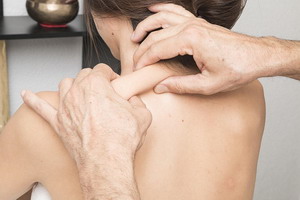
I’m not a counselor, and it’s not my role to manage your relationships for you. But the tension these moments produce shows up under my hands every week — in necks, shoulders, low backs, and the kind of chronic guarding that doesn’t resolve with adjustments alone because the nervous system keeps re-triggering it. Just like a strengthening exercise or a breathing practice, these two skills are something you do outside this office that changes what I’m working with inside it. The fewer alarms your body has to sound over ordinary differences with the people you love, the less raw material it has to convert into the pain patterns we end up treating together.
This is not an overnight skill. It is more like becoming go od at a sport. It takes practice. You have to find the words and timing and flow that works for you the best. That means a lot of trial and error. The tension patterns in your body will let you know how well you are doing. I am here to keep undoing those tension patterns while you get good at staying steady with difference. od at a sport. It takes practice. You have to find the words and timing and flow that works for you the best. That means a lot of trial and error. The tension patterns in your body will let you know how well you are doing. I am here to keep undoing those tension patterns while you get good at staying steady with difference.
Take care,
David
After three days in the hospital after Ellen’s hip replacement, the PT and doctors felt that Ellen needed some more intensive rehabilitation. We got her into Acute Rehab at Merc y General. But as it turned out, after a week, they decided that what they were doing was too intense. So now Ellen is being move to a skilled nursing facility to, as her hospital doctor phrase it, “to partake of the tincture of time.” Simply put, she needs to heal more before pushing the exercises. Many folks can actually walk out of the surgery center after a hip replacement surgery. But the 6 months of being bed ridden combined with her lack of functioning on the left side of her body due to her stroke 11 years ago, her system needs a little extra time and effort to bring things back around. y General. But as it turned out, after a week, they decided that what they were doing was too intense. So now Ellen is being move to a skilled nursing facility to, as her hospital doctor phrase it, “to partake of the tincture of time.” Simply put, she needs to heal more before pushing the exercises. Many folks can actually walk out of the surgery center after a hip replacement surgery. But the 6 months of being bed ridden combined with her lack of functioning on the left side of her body due to her stroke 11 years ago, her system needs a little extra time and effort to bring things back around.
Dental myths harm your teeth
Brushing right after eating or rinsing right after bru shing are examples that actually harm your teeth. Take the link to a great article on dental myths. shing are examples that actually harm your teeth. Take the link to a great article on dental myths.
More
___________________________
“Love respects the autonomy of others. Fear suppresses the autonomy of others.“
~David DeLapp
_____________________________________
Itchy sensitive skin?
Dermatitis or eczema is super annoying. Your skin has become very sensitive – part genetics, part environmental triggers, and part immune system overactivation. The key is to calm the skin down. See how to do that… become very sensitive – part genetics, part environmental triggers, and part immune system overactivation. The key is to calm the skin down. See how to do that…
More
____________________________
“An offer of support is actually an offer of “their way”. They want you to pursue their goals, their creations. Positive exchanges can occur when your goals and desires align with and support their goals and desires. Mutual support works. One way support does not. “
~David DeLapp
________________________________________
Chronic sleep loss promotes weight gain
If you are regularly getting only 6 hours of sleep a night, you end up burning less calories during the day and the ne t result is weight gain. t result is weight gain.
More
________________________
“One reason for feeling alone is a fear of embracing and participating with others that are different from you. Openness to others differences makes connection possible, but does not guarantee it. Feeling connected is the product of actually embracing and being able to participate with those others when they allow it. Feeling like you belong is when you feel that those others embrace and participate with your differences from them.“
~David DeLapp
|