If you’ve come into my treatment room and talked w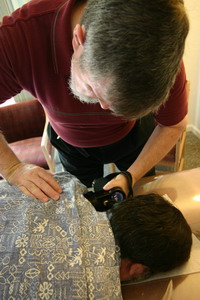 ith me about what’s been stressing you out lately, there’s a good chance it wasn’t about money, or work deadlines, or traffic. It was about a person. A spouse who won’t see it your way. A sibling who voted differently than you. A friend whose beliefs have drifted from yours. An adult child making choices you wouldn’t make.
This kind of stress is everywhere right now, and I want to be clear about something before I go further: it is not m y job to fix your relationships. That’s not my training, and it’s not what you come to me for. But it is my job to pay attention to what’s driving the tension in your body — and most of the time the tension isn’t really about the disagreement itself. It’s about what people fear the disagreement will cost them: the relationship, the closeness, the seat at the table. That fear, left running long enough, shows up as the tight shoulders, the clenched jaw, the low back pain, the disrupted sleep, and the flare-ups you bring into my office.
So today I want to offer you a different way of thinking about that fear — one that might help turn the volume down.
Your Body Already Knows How to Handle Difference
Think about your own body for a second. You’re made of trillions of cells, organized into dozens of different organs, e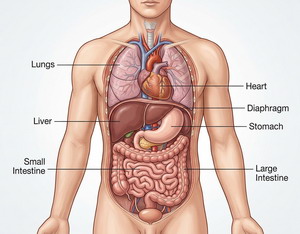 ach one doing something completely different from the others. Your liver doesn’t do what your heart does. Your skin doesn’t do what your stomach lining does. None of that difference is a problem. In fact, it’s the entire reason you’re alive — a body where every cell tried to be identical wouldn’t be a body at all. It works because the parts are different and each one does its own job well.
Here’s the part that matters for your stress: your body also has an immune system. Its job isn’t to attack anything that’s different from your own cells — if it did that, you’d never survive contact with food, sunlight, or other people. Its job is to recognize what’s actually trying to harm you and respond to that, specifically. A healthy immune system doesn’t treat your liver as a threat just because it’s not shaped like your heart. It saves its strongest response for what genuinely threatens the whole.
When the immune system gets this distinction wro ng — when it starts treating ordinary, harmless tissue as if it were an attacker — we have a name for that. We call it an autoimmune disorder. And it’s not a sign of a strong, protective body. It’s a malfunction. The body’s defenses, turned against itself, cause far more damage than the imagined threat ever could have.
I think something very similar happens in our relationships — though the “threat” most of us are actually defending against isn’t the one you’d expect.
What We’re Actually Afraid Of
Here’s where I need to be more precise than I might first appear to be. When most people feel that bracing, defensive tension around a person who sees things differently, they aren’t afraid that person is going to hurt them physically. What they’re afraid of is something quieter and, in some ways, more painful: if I don’t come around to their way of seeing it, they’re going to pull away from me. Less time together. Cooler conversations. The relationship slowly thinning out, or ending altogether. Being, in some sense, written off.
That fear deserves to be taken seriously, because it’s n ot irrational. We are social creatures, and for nearly all of human history, being cast out of the group wasn’t a minor social inconvenience — it was a survival threat. A person separated from the tribe didn’t have many ways to keep themselves fed or protected. So your nervous system inherited a setting that treats the threat of exclusion with nearly the same intensity it would treat a physical threat. The tight chest before a hard conversation with your daughter about her choices, the rehearsed arguments before seeing your brother at the holidays, the dread before a conversation you suspect will end in someone going quiet on you — your body isn’t confused about the stakes. For most of our history as a species, those stakes were close to mortal. Your body is just running an old program in a world where the actual consequences are usually softer than they used to be.
We Do the Same Thing in Our Relationships
This is where the autoimmune comparison earns its keep. A huge amount of the stress people bring into my office isn’t a bout disagreement itself — it’s the body bracing against the possibility of being shunned for the disagreement. Someone in our life believes something different, votes differently, worships differently, or simply lives differently than we do, and some part of us reacts as though the relationship itself is now at risk. Our shoulders tighten. Our jaw sets. We rehearse what we’ll say, or what we won’t. We lie awake running the conversation forward to its worst possible ending. All of that is your body spending real, physical resources defending against a loss that, very often, hasn’t happened and isn’t being threatened — it’s just difference, and your nervous system has filed it under “I might lose this person.”
This matters because difference is not the same thing as the withdrawal of belonging. Your sister-in-law having a different worldview than you doesn’t, by itself, mean she’s about to write you off, and your having a different one doesn’t mean you’re about to write her off either. It’s the story underneath the disagreement — if they don’t come around, I’ll lose them; if I don’t come around, they’ll lose me — that turns ordinary human variety into a threat your body feels obligated to prepare for.
To be clear, this doesn’t mean the fear is always misp laced. Some people do withdraw from those who won’t match them, and some relationships really are conditional on agreement in a way that’s genuinely painful to face. That’s a real loss, and it deserves to be grieved as one, not minimized. The skill worth building isn’t “never feel the fear” — it’s learning to tell, as clearly as you can, whether this particular person, in this particular relationship, actually operates that way, rather than assuming it by default because some part of you is still running the old, exclusion-means-death program. Before your body goes to full alert, it’s worth pausing and asking: Is this person actually going to withdraw from me over this? Or am I bracing for an exile that isn’t actually coming?
A Question Worth Carrying With You
That question — is this person actually going to withdraw from me, or am I bracing for an exile that isn’t coming? — is a powerful tool you can use with this subject. It won’t resolve your disagreement with your father or settle your argument with your coworker. That’s not its job. Its job is to help your body stand down when standing down is actually warranted, so the disagreement doesn’t also cost you your sleep, your digestion, and your shoulders.
A few ways this might show up in daily life:
When you notice yourself bracing for a conversation, ask the question before you walk in. Often what you’re bracing for is the disagreement itself, not an actual loss of the relationship — and your body doesn’t need to prepare for exile just because two people see something differently.
When a conversation has already taken a turn for the worse, reflect on it afterward while you’re still replaying the events. Pay attention to whether your body is genuinely picking up on signs that this person is pulling away, or if it’s simply reacting to old patterns that perceive any disagreement as the initial step toward being cut off.
When someone genuinely does withdraw over your difference, let the question provide you clarity rather than self-blame. That’s a real loss, and it’s all right to feel it as one. The objective isn’t to convince yourself that every fear of disconnection is unfounded. Instead, it’s to ensure that such fears are reserved for the relationships that genuinely experience disconnection, rather than being applied to everyone who perceives things differently from you.
What This Isn’t
This isn’t a suggestion to soften your convictions just to maintain harmony, or to seek agreement out of fear of being left behind. A healthy body doesn’t dissolve its differences; your he art remains a heart, your liver remains a liver, and they cooperate without becoming indistinguishable. You’re permitted to hold your views firmly, stay connected to individuals who don’t share them, and trust that the relationship can withstand the differences without either of you needing to win the other over. The two aren’t in conflict. In fact, they’re the same skill: recognizing that your bond with someone and your agreement with them aren’t actually the same thing, even though your body, in the moment, often can’t differentiate between them.
The organs in the body tolerate differences because t hey are all interdependent upon each other. People in our lives are much the same way. We depend on each other in so many ways, that we tolerate differences. Creating positive regard does not require sameness. It requires respect and acceptance. When you offer that along with your expression of difference, you communicate that you want to continue connection even if you see things differently than they do. They are just as afraid of loss of connection as you are. Let them know loss is not being threatened just because you feel differently about something.
The individuals who tend to carry the least physical tension aren’t those who’ve eliminated disagreements fro m their lives or those who’ve never lost someone due to a difference. Instead, they’ve developed the ability to discern which relationships genuinely depend on agreement and which ones, much like most of our organs, can coexist harmoniously even when each person is doing their own thing. This discernment is a skill, and like most skills, it becomes more proficient with practice.
I’ll revisit this in the next three newsletters because I don’t believe it’s a one-time insight—it’s more like a muscl e that has to be strengthened. For now, I’ll leave you with a simple question. The next time you feel your body brace before a difficult conversation with someone you love, ask yourself: is this person genuinely going to pull away from me, or am I bracing for a loss that isn’t actually coming? Let your answer guide how much of your body’s defenses the moment truly warrants.
As always, if the stress in your life manifests as pain or tension, I’m here to help.
Take Care
David
Images produced in Google Flow
Ellen
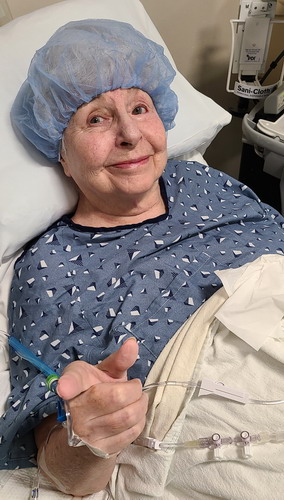 All right! Here it is Tuesday morning and we are headed to the hospital for the long awated hip surgery. Surgery took 2 1/2 hours and post op recovery took another three hours. I finally got to see Ellen around 6:30 Tuesday night. The surgeon said Ellen did well, but I heard later that there was a lot of necrotic bone that they had to dig out. By the time you read this Ellen will be in some sort of rehab facility for a bit. It has been a long road to this point. We are both glad that the surgery is done and Ellen can now work on getting her mobility back.
Lowering methionine can increase lifespan by 20 t o 40%. However if your levels are too low you end up so frail that your quality of life makes your longevity not worth it. Methionine tells your body to build and grow. So getting just the right amount is key to a long healthy life.
More
____________________________
“The power of now. There is only this now moment. All action and all feeling only exist in this now moment. The past is gone and the future doesn’t exist yet. “
~David DeLapp
________________________________________
Nordic Walking reduces depression

 1:30 PM. The worst cases were in bright environments greater than typical household lighting.