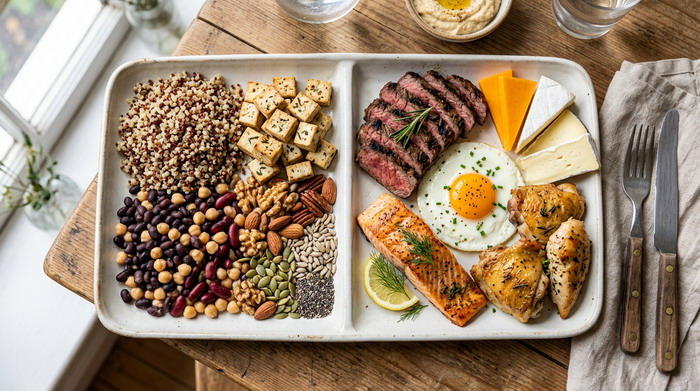
Most people have heard that protein is important, but fewer understand what protein actually does in the body. E ven fewer realize that getting enough protein is not always the same as getting the right kinds of protein. ven fewer realize that getting enough protein is not always the same as getting the right kinds of protein.
This distinction becomes especially important as we get older.
Whether your goal is maintaining muscle, recovering from illness, losing weight, preserving bone health, or simply staying strong and independent, your body depends on a steady supply of the essential amino acids proteins are made from.
What Are Amino Acids?
Proteins are built from smaller units called amino acids. Think of amino acids as the building blocks used to construct and repair your body’s tissues.
Your body uses amino acids to build:
- Muscles
- Tendons and ligaments
- Skin
- Hormones
- Enzymes
- Immune system proteins
- Neurotransmitters
There are 20 amino acids commonly used by the human body. Eleven can be made internally, but nine must come from food. These are called the essential amino acids.
If even one essential amino acid is missing, your body’s ability to build and repair tissues is limited.
A simple analogy is building a house. If you have plenty of lumber, concrete, windows, and plumbing, but you 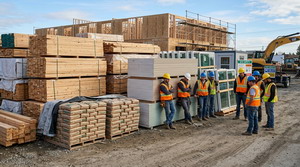 do not have enough nails and screws, construction slows down. The same thing happens when one essential amino acid is in short supply. do not have enough nails and screws, construction slows down. The same thing happens when one essential amino acid is in short supply.
Why Older Adults Need to Pay Special Attention
As we age, our bodies become less responsive to dietary protein. Researchers call this phenomenon “anabolic resistance.”
In practical terms, this means that a 70-year-old generally needs more protein and more essential amino acids to stimulate muscle maintenance than a 25-year-old.
This is important because aging naturally causes a gradual loss of muscle mass and strength. This loss contributes to:
- Reduced mobility

- Increased fall risk
- Greater difficulty performing daily activities
- Slower recovery from illness or injury
Providing the body with adequate essential amino acids is one of the most effective nutritional strategies for maintaining strength and independence.
Not All Proteins Are Equal
Foods differ in both the amount of protein they contain and the quality of that protein.
Proteins that contain all nine essential amino acids in sufficient amounts are called complete proteins.
Examples include:
- Eggs
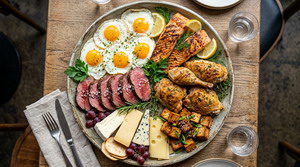
- Fish
- Poultry
- Beef
- Dairy products
- Soy foods
These foods provide a full spectrum of essential amino acids in proportions that support tissue repair and muscle maintenance.
Many plant foods contain protein but may be relatively low in one or more essential amino acids.
For example:
- Beans and lentils are relatively low in methionine
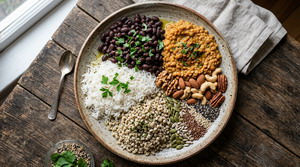 . .
- Grains are relatively low in lysine.
- Nuts and seeds are often lower in lysine.
This does not mean plant proteins are unhealthy. It simply means that people eating plant-based diets need to consume a variety of protein sources each day to obtain all essential amino acids.
The Special Role of Leucine
Among the essential amino acids, one deserves special attention: leucine.
Leucine acts as a signal that tells the body to begin bu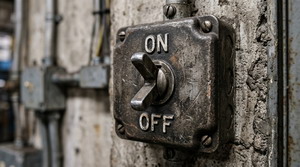 ilding and repairing muscle tissue. ilding and repairing muscle tissue.
You can think of leucine as the “on switch” for muscle protein synthesis.
Research suggests that older adults often benefit from consuming enough leucine at each meal to activate this muscle-building signal.
Foods naturally rich in leucine include:
- Whey protein
- Dairy products
- Eggs
- Meat
- Fish
- Soy foods
Because many plant proteins contain less leucine than animal proteins, older vegans may need somewhat larger protein servings to achieve the same effect.
What Does This Look Like for Omnivores?
For people who eat both plant and animal foods, meeting essential amino acid needs is usually straightforward.
A typical breakfast might include:
- Two eggs
- Greek yogurt

- Fruit
Lunch might include:
- Chicken breast
- Vegetables
- Brown rice
Dinner might include:
This eating pattern naturally provides all essential amino acids throughout the day.
The main challenge for many omnivores is not protein quality but simply consuming enough protein, particularly at breakfast.
Many adults eat very little protein in the morning and then consume most of their protein at dinner. A more balanced distribution often supports muscle maintenance more effectively.
What Does This Look Like for Vegans?
A well-planned vegan diet can absolutely provide all essential amino acids.
The key is variety.
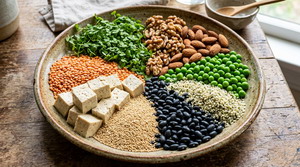
Good plant protein sources include:
- Duckweed (water lentils)
- Beans
- Amaranth
- Quinoa
- Hemp seeds
- Spirulina
- Chia Seeds
- Nutritional Yeast
- Lentils
- Peas
- Soy foods
- Tofu
- Tempeh
- Edamame
- Whole grains
- Nuts
- Seeds
Examples of balanced vegan meals include:
Breakfast
- Oatmeal topped with soy milk, chia seeds, and
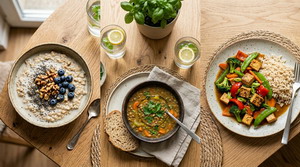 walnuts walnuts
Lunch
- Lentil soup with whole-grain bread
Dinner
- Tofu stir-fry with vegetables and brown rice
Snacks
- Roasted edamame
- Hummus with vegetables
- Soy yogurt
These foods complement one another and help provide the full range of essential amino acids the body requires.
Contrary to older nutrition advice, different protein sources do not need to be combined within the same meal. What matters most is obtaining a variety of protein sources throughout the day.
How Much Protein Do Most Adults Need?
The minimum recommended dietary allowance (RDA) is 0.8 grams of protein per kilogram of ideal body weight per day.
However, many experts believe this amount is too low for optimal muscle maintenance in older adults.
For healthy adults over age 65, a target of approximately 1.0 to 1.2 grams of protein per kilogram of ideal body weight per day is often recommended. For omnivores that looks like 9 to 14 ounces of cooked meat or 12 to 16 eggs each day. For vegans that would look like a pound and a half of tofu, or 6 cups of beans, or 12 cups of quinoa each day.
Those who are physically active, trying to lose weight, recovering from illness, or working to maintain muscle mass may benefit from 1.2 to 1.6 grams per kilogram per day.
Discuss your individual protein needs with your healthcare provider, particularly if you have kidney disease or other medical conditions.
The Bottom Line
Protein is not just about grams. It is also about quality.
Your body requires all nine essential amino acids to b uild and repair tissues, maintain muscle strength, support immunity, and promote healthy aging. uild and repair tissues, maintain muscle strength, support immunity, and promote healthy aging.
For omnivores, obtaining these amino acids is usually straightforward because animal proteins and dairy naturally contain all of them.
For vegans, obtaining all essential amino acids requires a little more planning, but it is entirely achievable through 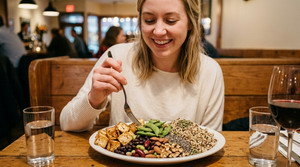 a varied diet that includes legumes, grains, nuts, seeds, and especially soy-based foods. a varied diet that includes legumes, grains, nuts, seeds, and especially soy-based foods.
As we age, paying attention to protein quality becomes increasingly important. A diet rich in essential amino acids can help preserve strength, mobility, independence, and quality of life for years to come.
Take care,
David
Here wwe see Ellen trying out one of my protein logs.  She usually eats 2 or 3 protein bars each day to supplement her protein intake. So I thought why not create a protein bar myself. I am a do-it-yourself kind of guy driven by my desire to not spend money unnecessarily. She has decided that both my chocolate logs and my vanilla logs are teriffic. Plus they have more protein than the bars she usually uses. She usually eats 2 or 3 protein bars each day to supplement her protein intake. So I thought why not create a protein bar myself. I am a do-it-yourself kind of guy driven by my desire to not spend money unnecessarily. She has decided that both my chocolate logs and my vanilla logs are teriffic. Plus they have more protein than the bars she usually uses.
Here is the recipe:
1 cup almond butter
1 cup protein powder
1/4 cup honey or allulose syrup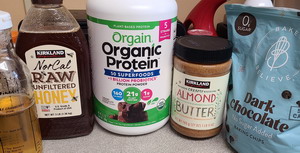
1/4 cup chocolate chips
Use any protein powder you like the taste of. I used the one pictured for the chocolate logs as the powder already had chocolate in it. For my vanilla logs I used egg white protein along with a dash of vanilla. Simply mix the first three ingredients by hand in a bowl until well blended then add the chocolate chips. With mine I use sugar free chocolate chips. Once well mixed I pinch out about 2 ounce pieces and hand mold into a log shape.
Allulose syrup I make myself when I want sweetness without any carbs or calories. Here I simply took a cup of allulose, a tsp of honey, and a 1/4 cup of water and cooked it on the stove until it bubbled for about a minute. Then cool.
Protein or exercise?
Research has shown that simply downing a protein shake in the morning does nothing to help you build or even m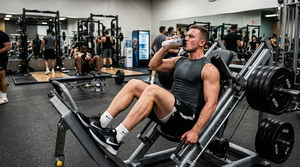 aintain muscle mass. You still need to do resistance training to build muscle. Protein helps exercise, but is not a replacement. aintain muscle mass. You still need to do resistance training to build muscle. Protein helps exercise, but is not a replacement.
More
___________________________
“Disassociation is a form of irresponsibility. To the degree that you block taking in information from life, you become unable to respond to that information. Responsibility is the ability to respond effectively.“
~David DeLapp
_____________________________________
Protein focus needs to include fiber
While the new protein guidelines double the old stan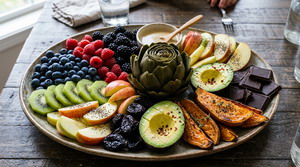 dards for protein for seniors, a focus on protein powders and meat leaves out the importance of fiber rich foods, antioxidants, and polyphenols found in plant sources of protein. The picture shows examples of such foods. dards for protein for seniors, a focus on protein powders and meat leaves out the importance of fiber rich foods, antioxidants, and polyphenols found in plant sources of protein. The picture shows examples of such foods.
More
____________________________
“Sustainable growth flows from small changes that accumulate over long periods of time. Big transformational shifts, while feeling great, rarely last. “
~David DeLapp
________________________________________
Plant proteins pros and cons
Plant proteins have several advantages, but also 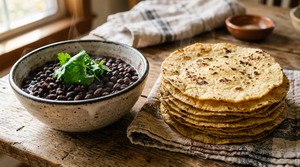 several disadvantages. Proper meal planning and food selection is essential for those wishing to use plants as the source for their proteins. For instance combining corn with beans compliments the proteins to create a complete protein. several disadvantages. Proper meal planning and food selection is essential for those wishing to use plants as the source for their proteins. For instance combining corn with beans compliments the proteins to create a complete protein.
More
________________________
“Love is not one thing, but many things that reflect each person’s individual history and emotional growth towards maturity. The one common connection is that love involves the desire for meaningful participation with another person. “
~David DeLapp
|