
Why Does Skin Change as We Age?
If you’ve noticed your skin becoming thinner, looser, or developing a tissue-paper-like crepey texture, you’re not imagining things — and it’s not simply inevitable. These changes have specific biological causes, and understanding them is the first step toward doing something meaningful about them.
Healthy young skin is supported by a dense network of collagen and elastin fibers woven together in the dermis — the d eep layer of skin beneath the surface. Collagen provides firmness and structural strength, while elastin gives skin its ability to snap back after being stretched. Together, they keep skin plump, resilient, and smooth.
Starting in our mid-twenties, collagen production be gins to slow — by roughly 1% per year. By our forties and fifties, the cumulative effect becomes visible. But it’s not just reduced production that’s the problem. Enzymes called matrix metalloproteinases (MMPs) actively break down existing collagen fibers. Sun exposure, pollution, and oxidative stress accelerate this destruction significantly. The result: thinner skin, lost elasticity, fine lines, and that characteristic crepey texture that develops on the face, neck, arms, and décolletage. In short, we look older.
The skin’s ability to retain moisture also diminishes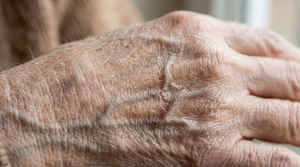 with age, as the natural moisturizing factors in the outer skin layer decline. This compounds the appearance of crepiness, since well-hydrated skin temporarily plumps fine lines and looks smoother. Reduced microcirculation — meaning less blood flow to the skin — further deprives skin cells of the oxygen and nutrients they need to function and repair.
The Missing Ingredient Most People Don’t Know About
Before we discuss what to apply to your skin, there’s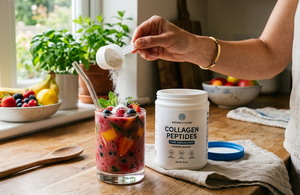 a crucial internal factor worth understanding: glycine, an amino acid that makes up roughly one-third of every collagen molecule in your body.
Your body can make some glycine on its own, but research increasingly shows that our internal production falls significantly short of what’s needed for optimal collagen synthesis — particularly as we age. Modern diets, which tend to favor muscle meat over collagen-rich cuts, bone broth, and connective tissue, make this deficit worse. No topical product can fix a glycine shortage. Fibroblasts — your skin’s collagen-producing cells — can be stimulated all day long by creams and potions, but if the raw material for making collagen isn’t available, production stalls.
Addressing this internally is one of the highest-leverage things you can do for your skin. Practical options include: ad ding homemade bone broth to your diet (2–4g of glycine per cup), taking collagen peptide powder daily (which provides pre-formed glycine-rich peptides), or supplementing with pure glycine powder — inexpensive, mildly sweet, and easily dissolved in water or coffee. A target of 3–5 grams per day is reasonable for most people. Us older folks might need 6-10 grams.
Collagen synthesis also requires adequate Vitamin C (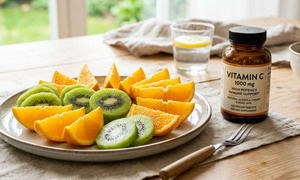 essential — without it, collagen cannot be formed at all), zinc, copper, and the amino acid proline. A diet rich in colorful vegetables, quality protein, and whole foods covers most of these bases. Vitamin C supplementation of 500–1000mg daily is supported by research for skin collagen support.
A Botanical Oil Blend Built on Science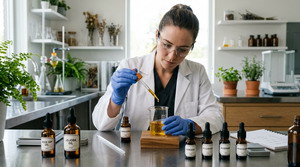
I have been working on a botanical oil blend that can significantly rebuild healthy skin tissue. It will be available in the office this week, but since not all the readers of this newsletter are local, I am providing my formula for those that want to make their own. When the body has what it needs internally, the right topical oils can meaningfully complement the rebuilding process — protecting existing collagen, stimulating fibroblast activity, blocking the enzymes that destroy collagen, and improving moisture retention. The following blend draws on botanicals with genuine clinical and biochemical evidence behind them.
Jojoba Oil (40% of blend) — Technically a liquid  wax rather than an oil, jojoba closely mimics the skin’s own sebum and penetrates deeply. Its high insaponifiable content is uniquely rich in phytosterols and triterpene alcohols that stimulate elastin formation. It also serves as an excellent carrier, delivering other active ingredients deeper into the skin than most oils can.
Rosehip Oil (30% of blend) — One of the most clin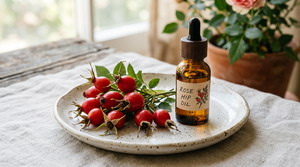 ically studied oils for aging skin. Rich in vitamin A and essential fatty acids, it stimulates collagen production and has been shown in randomized controlled trials to reduce wrinkle depth, improve elasticity, and increase hydration after 8 weeks of use.
Gotu Kola Infused Oil or CO2 Extract (20% of blend) — The standout ingredient of this blend. Gotu kola (Cente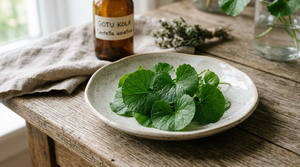 lla asiatica) contains triterpenoid compounds — asiaticoside, madecassoside, and asiatic acid — that directly activate fibroblasts and stimulate Type I and Type III collagen production. Studies have shown collagen increases of up to 77% with topical Centella extract. It also blocks collagen-destroying MMP enzymes and improves skin microcirculation.
Bakuchi Oil (5% of blend) — Derived from the s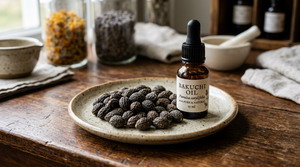 eeds of Psoralea corylifolia, this oil contains bakuchiol — a compound shown in head-to-head clinical trials to perform comparably to retinol for reducing fine lines and improving skin color, but without retinol’s notorious irritation, peeling, or photosensitivity. It can be used safely day and night.
Helichrysum Essential Oil (1% / ~6 drops per 30ml) — Known as the “Immortelle” or “Everlasting” flower, helichrys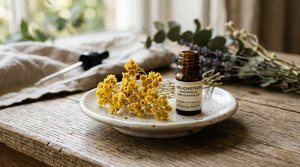 um works through a unique dual mechanism: it inhibits collagenase and elastase (the enzymes that break down collagen and elastin) while simultaneously stimulating new collagen production via fibroblast activation. Human clinical studies confirm visible improvements in wrinkle depth and elasticity.
Rosemary Essential Oil (0.5% / ~3 drops per 30ml
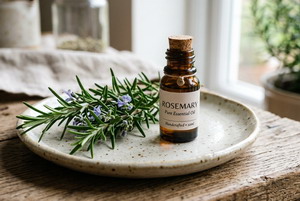 Contains ursolic acid, a compound shown to remodel collagen metabolism in aging skin, as well as rosmarinic acid which protects against UV-induced collagen degradation. Notably non-phototoxic, making it safe for daytime use.
Frankincense Essential Oil (0.5% / ~3 drops per 30ml) — An ancient remedy with modern validation. Its active c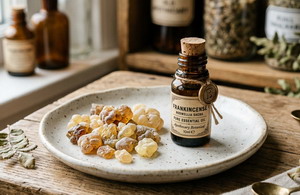 ompounds stimulate fibroblast activity and collagen synthesis, reduce inflammation that accelerates skin aging, and improve overall skin tone and texture.
How to Make and Use the Blend
Combine your jojoba, rose hip, gotu kola, and baku chi oil first in a dark glass dropper bottle (amber or cobalt blue), then add your essential oils. Roll the bottle gently between your palms to blend — do not shake vigorously. Store away from heat and direct light. Rose hip oil is fairly fragile, so use this blend within 3 to 4 months.
Morning application: Apply 3–4 drops to slightly damp, freshly cleansed skin. The blend is safe for daytime use. Always follow with a broad-spectrum SPF 30 or higher sunblock if you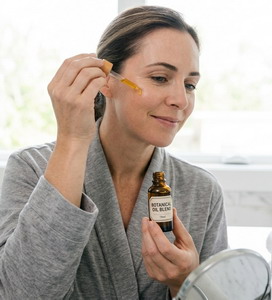 are going to be out in the sun more than 20 minutes — no topical product can rebuild collagen as fast as unprotected sun exposure destroys it.
Evening application: Apply 4–6 drops after cleansing, before any heavier moisturizer. This is the higher-value application, as skin enters its peak repair cycle overnight. Bakuchiol and gotu kola work most effectively during this window.
What to Realistically Expect
Skin improvement is cumulative and requires patience. Most people notice improved hydration and smoother t exture within 2–4 weeks. Measurable improvements in firmness and elasticity typically emerge around 6–8 weeks. Meaningful collagen rebuilding and reduction in skin thinning take 3–6 months of consistent daily use — which mirrors the timelines seen in clinical research on these individual ingredients.
The most important insight from the science is this: topical oils and internal nutrition are not competing approaches — they are complementary and synergistic. The oils send the biological signal to produce collagen; dietary glycine, vitamin C, and protein provide the raw materials to actually complete the job. Address both, and you give your skin everything it needs to genuinely restore itself.
Take care,
David
Images produced in Google Flow
Ellen
We got the last steps completed in preparation for Ell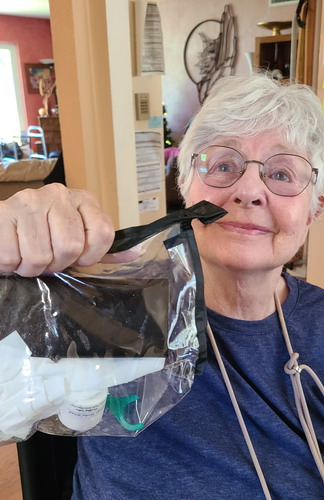 en to get a new hip. We got more blood taken and we saw the surgeon for the pre-op visit. Everything is a go for surgery this coming Thursday. We check in a 11, and surgery is scheduled for 1pm. We don’t know yet if she will be staying in the hospital for a few days or not. It depends on how well she does after the surgery. The insurance company wants her to go home right away. Here Ellen is preparing a bag of essential personal care items in case she ends up in the hospital.
Tapping improves auditory speech processing
French researchers have found that tapping your fingers at 1.8Hz – about 2 times a second, enabled people to better h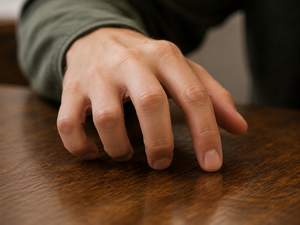 ear and understand someone in a noisy environment. The physical tapping enhanced the brain areas for speech recognition.
___________________________
“Love respects the autonomy of others. Fear suppresses the autonomy of others.“
~David DeLapp
_____________________________________
Your brain reads books differently than e-readers
Doing brain scans on folks while reading showed less brain effort was needed when the subjects were reading from paper books versus e readers.
____________________________
“The only safety is through listening, trusting, and acting on life’s directions. “
~David DeLapp
________________________________________
Hair loss pill?
A new hair loss pill is about to be approved, the first in 30 years. The most recent study demonstrated an 80% succes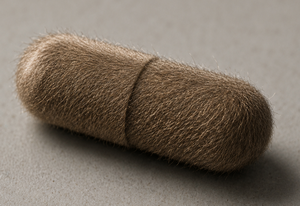 s rate without messing up the subjects hormones.
________________________
“Learn and let go. Our life stories are to learn from and then let go, not identify with. To hold on is to stop our growth. This is the real reason for forgiveness.“
~David DeLapp