If you’ve ever had a stubborn knot of tissue after an in jury or surgery that just won’t loosen up — or noticed your skin isn’t as firm as it used to be — you’ve met the same cell doing two very different jobs. Understanding that connection is the key to understanding which treatments actually make sense for which problem. jury or surgery that just won’t loosen up — or noticed your skin isn’t as firm as it used to be — you’ve met the same cell doing two very different jobs. Understanding that connection is the key to understanding which treatments actually make sense for which problem.
What are adhesions and fibrosis, really?
When tissue is injured — from a pulled muscle, a su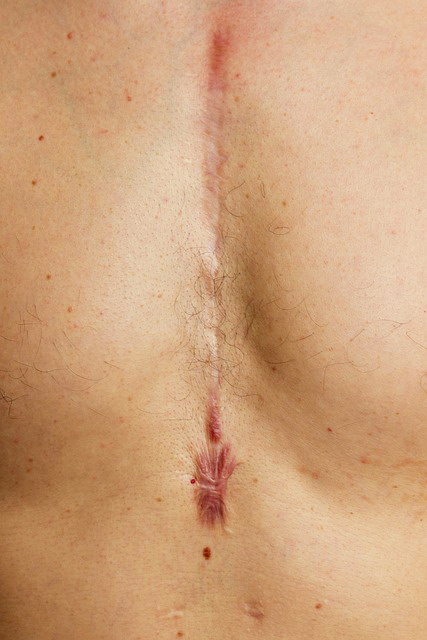 rgical incision, or years of repetitive strain — your body repairs it with new collagen, the structural protein that holds tissue together. Usually this process is well organized and the new tissue heals cleanly. But sometimes the collagen is laid down in a disorganized, overly dense way. When this happens within a tissue, we call it fibrosis. When it causes two structures that should glide past each other — like a muscle and the tissue layer around it — to stick together instead, we call it an adhesion. rgical incision, or years of repetitive strain — your body repairs it with new collagen, the structural protein that holds tissue together. Usually this process is well organized and the new tissue heals cleanly. But sometimes the collagen is laid down in a disorganized, overly dense way. When this happens within a tissue, we call it fibrosis. When it causes two structures that should glide past each other — like a muscle and the tissue layer around it — to stick together instead, we call it an adhesion.
Common causes include muscle tears, surgery, prolon ged immobilization after injury, repetitive overuse, blood pooling (hematoma) after a significant injury, and radiation treatment. Some people are also simply more prone to this kind of overactive healing. ged immobilization after injury, repetitive overuse, blood pooling (hematoma) after a significant injury, and radiation treatment. Some people are also simply more prone to this kind of overactive healing.
The cell behind it all
Here’s the part most people never hear: fibrosis isn’t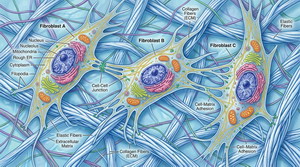 a separate, mysterious disease process. It’s the same cellular repair machinery that heals a paper cut — just stuck in the “on” position for too long. a separate, mysterious disease process. It’s the same cellular repair machinery that heals a paper cut — just stuck in the “on” position for too long.
The key player is a cell called a fibroblast. When tissue is injured, fibroblasts activate, multiply, and produce new collagen to close the wound. In a healthy, well-regulated recovery, that activity ramps up, does its job, and then shuts back off. In fibrosis and adhesions, the “off switch” doesn’t get flipped — fibroblasts keep producing collagen well past the point of usefulness, leaving behind dense, stuck tissue.
Interestingly, this same switch runs in the opposite di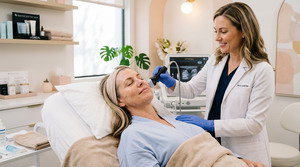 rection too. As we age, our skin’s collagen and elastin (the protein that gives skin its bounce) production naturally declines. Some newer aesthetic treatments work by deliberately, briefly reactivating that same fibroblast switch — just enough to stimulate fresh collagen and elastin, without letting it run out of control. rection too. As we age, our skin’s collagen and elastin (the protein that gives skin its bounce) production naturally declines. Some newer aesthetic treatments work by deliberately, briefly reactivating that same fibroblast switch — just enough to stimulate fresh collagen and elastin, without letting it run out of control.
So the real question with any of the treatments below isn’t “does it affect fibroblasts?” — nearly all of them do. It’s “which direction is it nudging things, and how well is that shown to work?”
Treatments aimed at breaking down excess scar tissue
Oral fibrinolytic enzymes (such as nattokinase and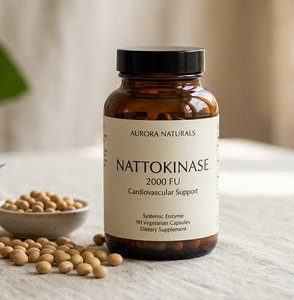 serrapeptase) are marketed as a way to dissolve old scar tissue from the inside out. There’s genuine, if incomplete, evidence that some of these enzymes survive digestion and enter the bloodstream in active form. The strongest human trial evidence is for symptom improvement in lung fibrosis, not muscle adhesions specifically — the muscle and joint-related evidence is mostly from animal and lab studies so far. Worth knowing about, but not yet proven for this specific use in people, and these supplements carry a real bleeding risk that should be discussed with your doctor, especially around surgery or if you take blood thinners. serrapeptase) are marketed as a way to dissolve old scar tissue from the inside out. There’s genuine, if incomplete, evidence that some of these enzymes survive digestion and enter the bloodstream in active form. The strongest human trial evidence is for symptom improvement in lung fibrosis, not muscle adhesions specifically — the muscle and joint-related evidence is mostly from animal and lab studies so far. Worth knowing about, but not yet proven for this specific use in people, and these supplements carry a real bleeding risk that should be discussed with your doctor, especially around surgery or if you take blood thinners.
Manual therapies — instrument-assisted soft tissu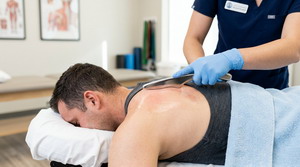 e mobilization (IASTM, sometimes called Graston technique) and Gua Sha (a traditional scraping technique) — apply mechanical pressure to tissue with a tool. Research shows short-term improvements in pain, flexibility, and blood flow at the treated site, and there’s reasonable evidence they help with pain and function, especially alongside exercise. Whether they truly break down old, established scar tissue is less certain — the field agrees more research is needed on that specific point. e mobilization (IASTM, sometimes called Graston technique) and Gua Sha (a traditional scraping technique) — apply mechanical pressure to tissue with a tool. Research shows short-term improvements in pain, flexibility, and blood flow at the treated site, and there’s reasonable evidence they help with pain and function, especially alongside exercise. Whether they truly break down old, established scar tissue is less certain — the field agrees more research is needed on that specific point.
Shockwave therapy (ESWT) uses focused acoustic pulses and has some of the strongest tissue-level evidence in th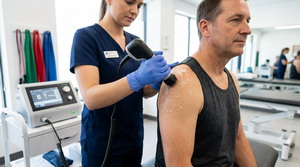 is group. Studies on keloid and hypertrophic scars have found it actually reduces collagen content and fibrotic markers when biopsied — not just improving how a scar looks or feels. It also shows promise for muscle injuries and hematomas, though that specific research base is still small. is group. Studies on keloid and hypertrophic scars have found it actually reduces collagen content and fibrotic markers when biopsied — not just improving how a scar looks or feels. It also shows promise for muscle injuries and hematomas, though that specific research base is still small.
Laser and LED light therapy (photobiomodulation) is a lower-energy approach that appears to shift the type of coll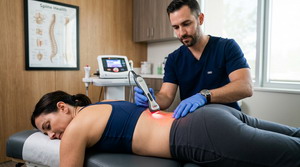 gen a healing tissue produces — favoring organized, mature collagen over the disorganized type associated with poor scarring. There’s direct evidence for reduced adhesion formation after surgery and improved tendon gliding after tendon repair. One important and often overlooked finding: once light enters tissue, it scatters within the first couple of millimeters and loses the special property (coherence) that distinguishes a laser from an ordinary LED. Multiple independent studies confirm that a properly matched LED device — same wavelength, same dose — produces essentially the same cellular effect as an expensive treatment laser. This is genuinely useful news for accessibility: clinic lasers can cost $8,000–$12,000, while quality LED red-light devices are available for a fraction of that, making at-home maintenance realistic for many patients. The caveat is that device quality varies widely — actual light output (irradiance) often doesn’t match the marketing claims, so it’s worth confirming a device delivers a meaningful dose before relying on it, and using an appropriate treatment time for that output. gen a healing tissue produces — favoring organized, mature collagen over the disorganized type associated with poor scarring. There’s direct evidence for reduced adhesion formation after surgery and improved tendon gliding after tendon repair. One important and often overlooked finding: once light enters tissue, it scatters within the first couple of millimeters and loses the special property (coherence) that distinguishes a laser from an ordinary LED. Multiple independent studies confirm that a properly matched LED device — same wavelength, same dose — produces essentially the same cellular effect as an expensive treatment laser. This is genuinely useful news for accessibility: clinic lasers can cost $8,000–$12,000, while quality LED red-light devices are available for a fraction of that, making at-home maintenance realistic for many patients. The caveat is that device quality varies widely — actual light output (irradiance) often doesn’t match the marketing claims, so it’s worth confirming a device delivers a meaningful dose before relying on it, and using an appropriate treatment time for that output.
Treatments aimed at the opposite problem: stimulating renewal
For skin that has lost firmness with age, rather than t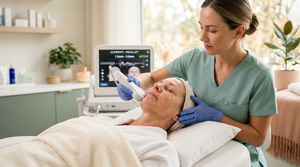 rying to “unstick” excess tissue, the goal is coaxing more fibroblast activity out of an under-active system. Microfocused ultrasound (MFU-V) — the technology behind devices like Ultherapy — uses precisely targeted heat at specific depths under the skin to trigger a controlled healing response. Recent biopsy studies show this doesn’t just tighten skin temporarily through heat contraction; it measurably increases both new collagen and new elastin production over the following months, which is a meaningfully deeper effect than most non-invasive skin treatments can claim. rying to “unstick” excess tissue, the goal is coaxing more fibroblast activity out of an under-active system. Microfocused ultrasound (MFU-V) — the technology behind devices like Ultherapy — uses precisely targeted heat at specific depths under the skin to trigger a controlled healing response. Recent biopsy studies show this doesn’t just tighten skin temporarily through heat contraction; it measurably increases both new collagen and new elastin production over the following months, which is a meaningfully deeper effect than most non-invasive skin treatments can claim.
The takeaway
Fibrosis and aging-related tissue laxity are two ends of the same biological process, not separate problems requiring u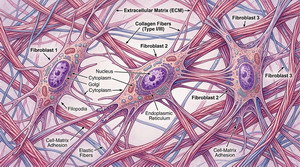 nrelated science. Every treatment discussed here works by nudging that same fibroblast activity — some aiming to calm an overactive response, others aiming to wake up an underactive one. None of these approaches is a guaranteed fix, and the quality of evidence varies significantly between them — from solid, biopsy-confirmed tissue changes down to promising-but-preliminary animal data. If you’re considering any of these options for a specific issue, it’s worth discussing with your provider which evidence base actually applies to your situation, since “it affects fibroblasts” is true of nearly everything on this list — the details of degree, direction, and proof are what matter. nrelated science. Every treatment discussed here works by nudging that same fibroblast activity — some aiming to calm an overactive response, others aiming to wake up an underactive one. None of these approaches is a guaranteed fix, and the quality of evidence varies significantly between them — from solid, biopsy-confirmed tissue changes down to promising-but-preliminary animal data. If you’re considering any of these options for a specific issue, it’s worth discussing with your provider which evidence base actually applies to your situation, since “it affects fibroblasts” is true of nearly everything on this list — the details of degree, direction, and proof are what matter.
Colloidal Silver is back and available in the office. Silver has quadrupled in price over the last two years, so the price we have it for in the office is a real steal!
Ellen is still at the skilled nursing facility, but we got some good news – she is slated to go home Tuesday! She has been fighting a bad chest cold brought in by one of the nurses last week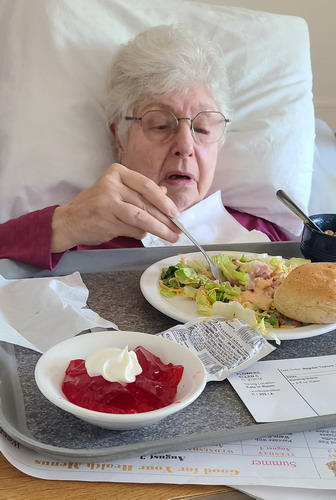 . Hopefully she gets over that before we move her. Here she is trying to garp down some of the dinner they brought her while I was visiting. You gotta love the classic red Jell-O. . Hopefully she gets over that before we move her. Here she is trying to garp down some of the dinner they brought her while I was visiting. You gotta love the classic red Jell-O.
Using microbes to fight insulin resistance
High fat diets (saturated and oxidized veggie oils) g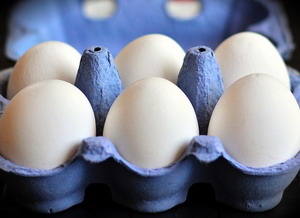 enerate inflammation in the body that results in insulin resistance in obese individuals. New research has discovered the pathway that produces this and found that conduming high doses of choline (like in eggs) can dampen this process. The gut bacteria convert the choline into trimethylamine, which blocks this inflammatory pathway. enerate inflammation in the body that results in insulin resistance in obese individuals. New research has discovered the pathway that produces this and found that conduming high doses of choline (like in eggs) can dampen this process. The gut bacteria convert the choline into trimethylamine, which blocks this inflammatory pathway.
More
___________________________
“Since value is that quality of anything which renders it desirable or useful, our value to others only exists to the extent our anticipated participation is either desirable or useful. Generally if we are separate we are neither desirable nor useful.“
~David DeLapp
_____________________________________
Is chronic fatigue a calcium control problem?
New research is finding that the ability of many cells in a chronic fatigue patient are unable to pull in calcum the way th ey are supposed to. That results in the cells not being able to make the energy they need to function. Part of the proper functioning of this system is the need for magnesium inside the cells to swap places with the calcium. So low magnesium may play into this. ey are supposed to. That results in the cells not being able to make the energy they need to function. Part of the proper functioning of this system is the need for magnesium inside the cells to swap places with the calcium. So low magnesium may play into this.
More
____________________________
“The desire for security is the desire to be separate from the uncertainties of life, yet it is this separateness from life that produces our insecurity. Life is constant change. True security comes from learning to embrace and adapt to change.“
~David DeLapp
________________________________________
Vitamin K1 reduced COPD symptoms
Vitamin K1, found in leafy green vegetables, has b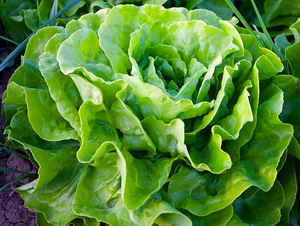 een found to reduce COPD symptoms aroud 16%. This is not seen with vitamin K2, the one we use to help with calcium absorption in the gut. een found to reduce COPD symptoms aroud 16%. This is not seen with vitamin K2, the one we use to help with calcium absorption in the gut.
More
________________________
“A general tone of happiness comes from appreciating the skills we have developed; from knowing that we are good enough. We accept that there will always be new problems and challenges, but overall we are good enough.“
~David DeLapp
|
|
|
|