Key concept: Protecting your arteries begins with protecting the inner lining of the arteries with lifestyle choices.
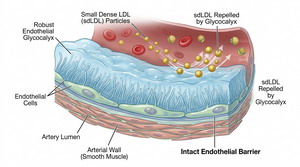 Deep inside every artery in your body is a delicate, gel-like layer called the glycocalyx. Think of it as a protective coating lining the inside of your blood vessels — similar to how a nonstick coating protects a pan. It’s only about a micron thick (thinner than a human hair), but it does heavy lifting: it keeps blood cells from sticking where they shouldn’t, controls inflammation, and acts as a shield for the artery wall underneath.
 Here’s why this matters: research increasingly suggests that damage to this layer is one of the very first steps in the development of atherosclerosis — the plaque buildup process behind heart attacks and strokes. Long before cholesterol plaques become visible on a scan, this microscopic coating is already being worn down.
 The encouraging news? Unlike hardened plaque, early glycocalyx damage appears to be reversible. The everyday choices you make — what you eat, how you move, how you sleep, and how you manage stress — directly influence whether this layer stays intact or breaks down. This newsletter focuses on exactly those modifiable actions.
What Wears This Layer Down?
 Before talking about protection, it helps to understand the main culprits, since many of them are things we can actually change:
- Blood sugar spikes — even in people without diabetes, a sugary or highly refined meal causes measurable, temporary damage within hours
- Big spikes in blood fats after eating — particularly after large, high-fat meals
- Sitting for long stretches — healthy blood flow patterns keep this lining strong; prolonged stillness allows it to thin
- Smoking and air pollution — deliver oxidizing chemicals directly into the bloodstream
- Poor sleep, especially sleep apnea — repeated dips in oxygen overnight are particularly damaging
- Chronic stress — sustained stress hormones raise blood pressure and inflammation
- Nutrient gaps — particularly vitamin C, magnesium, and omega-3 fatty acids, all of which the body needs to build and maintain this layer
The good news is that essentially every item on this list responds to lifestyle change — often faster than most people expect.
Five Actions You Can Take
 1. Move Regularly (Not Just Occasionally)
Of everything studied, regular moderate aerobic activity has the most consistent evidence for actually rebuilding this protective layer. Walking, cycling, swimming, or similar activities create a healthy, rhythmic flow of blood that appears to switch on the body’s own repair processes. Improvements have been observed within just a few weeks of starting a routine.
One nuance worth knowing: a single bout of extremely intense exercise (think finishing a marathon undertrained) can temporarily stress this layer. It’s the steady, moderate, consistent pattern — not occasional heroic efforts — that builds lasting protection.
Practical takeaway: Aim for 30 minutes of moderate activity most days of the week. Consistency matters more than intensity.
2. Flatten Your Blood Sugar Curve
 Since glucose spikes are one of the fastest-acting triggers of damage, smoothing out those spikes is one of the most immediately impactful changes you can make.
Practical takeaway:
- Pair carbohydrates with protein, fiber, or healthy fat rather than eating them alone
- Favor whole grains, vegetables, and legumes over refined flour and sugar
- Consider a short walk after meals — this alone measurably blunts post-meal glucose spikes
3. Rethink Your Fats
 Large amounts of refined seed oils (common in fried and packaged foods) tend to push the body’s inflammatory balance in the wrong direction. Omega-3 fatty acids help counterbalance this — but not all omega-3 sources are equal.
There are two forms worth knowing about. EPA and DHA are the long-chain forms found in fatty fish, and these are the forms with the most direct evidence for supporting vascular health. ALA, found in flaxseed, chia, and walnuts, is a shorter-chain plant form that the body can technically convert into EPA and DHA — but that conversion is quite limited, often in the range of just a few percent, and even less efficient for DHA specifically. In practical terms, this means flax and chia are helpful additions to a healthy diet (they bring fiber and other nutrients), but they shouldn’t be relied on as your main source of omega-3 if the goal is meaningfully raising EPA and DHA levels.
Practical takeaway:

- Aim for fatty fish (salmon, sardines, mackerel) twice a week — this remains the most reliable way to get EPA and DHA
- If you don’t eat fish, krill oil or an algae-based omega-3 supplement is a more dependable option than relying on flax or chia alone, since algae is the original source fish get their omega-3s from.
- Still include flax, chia, and walnuts for their other benefits, just don’t count on them alone to do the job
- Keep an eye on omega-6 intake (common in fried foods and many packaged snacks) — a diet very high in omega-6 further reduces the body’s already limited ability to convert plant omega-3s.
4. Protect Your Sleep
 Sleep is not passive downtime for your blood vessels — it’s active repair time. Sleep deprivation raises inflammatory markers, and untreated sleep apnea (loud snoring, gasping, or daytime fatigue) causes repeated overnight oxygen dips that are especially hard on this vulnerable lining.
Practical takeaway: Prioritize 7–9 hours of consistent sleep. If you snore heavily or wake unrefreshed, ask your doctor about sleep apnea screening — treating it is one of the more powerful things you can do for long-term vascular health.
5. Don’t Underestimate Stress and Sitting
 Chronic stress keeps stress hormones elevated, which raises blood pressure and inflammation — a combination that steadily wears down the vascular lining. Similarly, sitting for hours without moving reduces the healthy blood flow patterns this layer depends on.
Practical takeaway: Build in brief movement breaks every hour if you have a desk job, and find a stress-management practice you’ll actually stick with — whether that’s a daily walk, breathing exercises, time in nature, or simply protecting time to decompress.
A Note on Nutrients
If your diet is generally poor in fruits and vegetables, it’s worth having your healthcare provider check for gaps in vitamin C, magnesium, and omega-3s — all of which play direct roles in maintaining this arterial lining. Correcting a genuine deficiency tends to help more than taking large doses on top of an already sufficient level. For a more detailed picture of nutrients for supporting the arteries check out this earlier article.
The Bigger Picture
 None of this requires an extreme overhaul. What’s genuinely encouraging is that the habits known to support long-term heart health — moving your body regularly, eating in a way that avoids large blood sugar swings, sleeping well, managing stress, and not smoking — are precisely the same habits that protect this very first, microscopic layer of defense inside your arteries.
Atherosclerosis doesn’t begin with a dramatic event. It begins quietly, at a cellular level, often decades before any symptoms appear. That also means prevention can begin quietly too — with small, sustainable choices that add up meaningfully over time.
Take care,
David
Ellen
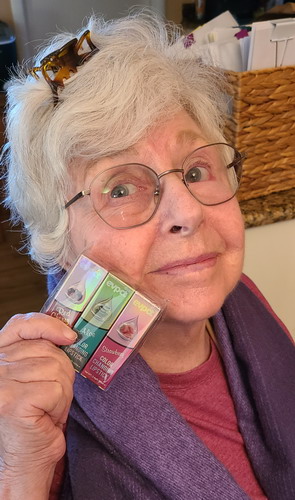 In spite of all the recent health challenges Ellen has experienced, they do not stop her from looking for and trying out new shades of lipstick! Her favorite brand that was made by a fellow that sold them at the state fair. But after 30 years he gave up the business, so Ellen has had to try to find replacements. The first color she tried of this triplet, dark cherry, was much too dark and intense. She prefers a much subtler shade.
CDC finds measles transmitted by folks vaccinated for measles
 A peer reviewed study by CDC, WHO, and Johns Hopkins has found that 8 out of every 100 vaccinated folks that catches measles transmits it to someone else. I thought you weren’t supposed to get measles if you were vaccinated. Guess I was wrong.
___________________________
“Optimism – not a childish hope that something good will happen, but the belief in your own skills to adapt and create good things from life.”
~David DeLapp
_____________________________________
Testosterone may be why you can’t build muscle
 Testosterone is the hormone that helps you build muscle – this includes women. By age 40 women produce half as much as at 20. By menopause this loss can really impair your attempts to stay healthy. Read about this at this link…
____________________________
“One reason for feeling alone is a fear of embracing and participating with others that are different from you. Openness to others differences makes connection possible, but does not guarantee it. Feeling connected is the product of actually embracing and being able to participate with those others when they allow it. Feeling like you belong is when you feel that those others embrace and participate with your differences from them.”
~David DeLapp
________________________________________
Feeling appreciated at work lowers blood pressure
 50% of people have high blood pressure. Much of it is driven by stress – that fight-or-flight state that ramps up your adrenaline. Being authentically appreciated helps your system wind down and relax, lowering your blood pressure.
“Love respects the autonomy of others. Fear suppresses the autonomy of others. ”
~David DeLapp