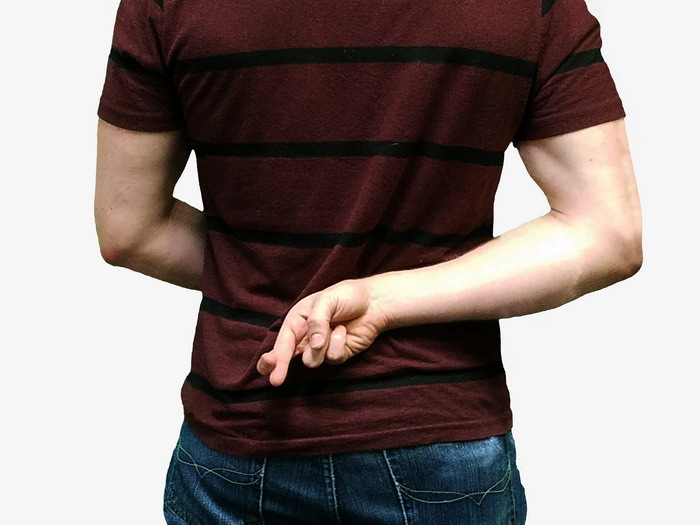
In the last newsletter, I gave you a piece of advice for hard conversations: say the bond out loud before you say  the disagreement. Tell the person plainly that this isn’t going to change how you feel about them, before you tell them the thing they might not want to hear. the disagreement. Tell the person plainly that this isn’t going to change how you feel about them, before you tell them the thing they might not want to hear.
That advice is true, but it’s incomplete on its own. I want to provide the missing piece because it significantly alter s how you actually use it. The sentence is not the main event. Long before the other person finishes processing your words, their nervous system has already read your posture, your breathing, the tension in your jaw, where your eyes are pointed, the set of your shoulders, the tone of your voice, and the fleeting expressions crossing your face faster than you can control them. That reading happens first, and it happens automatically. If what your body is saying doesn’t match what your mouth is saying, the other person’s system will believe the body. It almost always does. s how you actually use it. The sentence is not the main event. Long before the other person finishes processing your words, their nervous system has already read your posture, your breathing, the tension in your jaw, where your eyes are pointed, the set of your shoulders, the tone of your voice, and the fleeting expressions crossing your face faster than you can control them. That reading happens first, and it happens automatically. If what your body is saying doesn’t match what your mouth is saying, the other person’s system will believe the body. It almost always does.
This isn’t a communication trick. It’s closer to the kind of thing I already work with you on each visit, just applied to a different setting.
Why the Body Wins the Argument
You’ve likely noticed this from the other side, even if you’ve never put words to it. Someone tells you “I’m fine,” while their arms are crossed, their jaw is tight, and they won’t me et your eyes — and you don’t believe the sentence. You believe the body. We are built to do this, and for good reason: words can be chosen and edited in a way that posture, breath, and micro-expressions largely can’t. When the two channels disagree, the involuntary one is the more honest witness, and everyone’s nervous system, yours included, knows that instinctively, even without being taught it. et your eyes — and you don’t believe the sentence. You believe the body. We are built to do this, and for good reason: words can be chosen and edited in a way that posture, breath, and micro-expressions largely can’t. When the two channels disagree, the involuntary one is the more honest witness, and everyone’s nervous system, yours included, knows that instinctively, even without being taught it.
This means that trying to perform calm — softening your voice on purpose, arranging your face into something pleasant, while your body is still braced underneath — usually backfires. People tend to sense the gap between the performance and what ‘s actually happening in you, even if they can’t name what feels off. It often reads as more unsettling than open tension would have, because now there are two signals instead of one, and they’re contradicting each other. ‘s actually happening in you, even if they can’t name what feels off. It often reads as more unsettling than open tension would have, because now there are two signals instead of one, and they’re contradicting each other.
The more reliable path isn’t to manage the output. It’s to change the input: settle your actual nervous system, and let the calm voice, the open posture, the steady gaze be the natural result of that, rather than a mask placed over something still clenched.
How to Actually Settle Before You Speak
This is where the work overlaps with things I already coach many of you through for entirely different reasons — bet ter digestion, better sleep, lower baseline tension. The nervous system doesn’t really distinguish between “calm before a meal” and “calm before a hard conversation.” It’s the same system, the same switch. It is all about stimulating the Vagus nerve. ter digestion, better sleep, lower baseline tension. The nervous system doesn’t really distinguish between “calm before a meal” and “calm before a hard conversation.” It’s the same system, the same switch. It is all about stimulating the Vagus nerve.
Exhale longer than you inhale. A handful of slow breaths, with the out-breath noticeably longer than the in-breath, is o ne of the fastest ways to shift your nervous system out of a guarded state. Even three or four rounds, taken quietly before you walk into the room or pick up the phone, measurably changes your physiology — and your face and voice will reflect that shift without you having to manufacture anything. ne of the fastest ways to shift your nervous system out of a guarded state. Even three or four rounds, taken quietly before you walk into the room or pick up the phone, measurably changes your physiology — and your face and voice will reflect that shift without you having to manufacture anything.
Drop your shoulders and unclench your jaw, on purp ose, more than once. Both tend to creep back up without you noticing. Checking in on them periodically through a difficult conversation — not just once at the start — keeps your body’s signal consistent with your words throughout, not just in the opening line. ose, more than once. Both tend to creep back up without you noticing. Checking in on them periodically through a difficult conversation — not just once at the start — keeps your body’s signal consistent with your words throughout, not just in the opening line.
Let your gaze soften rather than fix. A hard, unblinking stare reads as a challenge to most nervous systems, even when no challenge is intended.
Steady, relaxed eye contact — checking in, looking  away naturally now and then the way you would in any easy conversation — reads as safety. This isn’t about technique so much as it’s a side effect of actually feeling less on guard; forcing eye contact while still bracing internally tends to look exactly like what it is. away naturally now and then the way you would in any easy conversation — reads as safety. This isn’t about technique so much as it’s a side effect of actually feeling less on guard; forcing eye contact while still bracing internally tends to look exactly like what it is.
Slow your rate of speech slightly. A quickened pace is one of the most reliable tells of an activated nervous system, even when the words themselves are measured. Slowing down by even a little tends to pull the rest of your physiology down with it, rather than the other way around.
None of these are about performing calm convincing ly. They’re about becoming actually calmer, which then shows up on its own in your posture, voice, and face — the same relationship between cause and effect you already understand from working with your own body in every other context. ly. They’re about becoming actually calmer, which then shows up on its own in your posture, voice, and face — the same relationship between cause and effect you already understand from working with your own body in every other context.
What This Means for the Hard Conversation
So the fuller version of last issue’s advice is this: befo re you ever say “this isn’t going to change how I feel about you,” take the breaths, drop the shoulders, unclench the jaw. Let your body arrive at the conversation already telling the truth your words are about to say. When the two channels agree, the message lands the way you intend it. When they don’t, the other person’s nervous system will quietly choose to believe the older, more reliable channel — and no sentence, however well chosen, will be able to talk it out of that. re you ever say “this isn’t going to change how I feel about you,” take the breaths, drop the shoulders, unclench the jaw. Let your body arrive at the conversation already telling the truth your words are about to say. When the two channels agree, the message lands the way you intend it. When they don’t, the other person’s nervous system will quietly choose to believe the older, more reliable channel — and no sentence, however well chosen, will be able to talk it out of that.
While this is good advice for improving relationships , more importantly from my perspective, it is a profound way that you can love your body by preventing unnecessary tension. It is the guarding tension patterns in your body that make it vulnerable to “things going out of place” for no good reason. About half of the work I do with people is for these types of issues. I love seeing you guys, but I am all for avoiding unnecessary pain whenever possible. I see doing relationship work in the same way I see doing back exercises, balance work, stretching, and eating well. It is all about promoting health! , more importantly from my perspective, it is a profound way that you can love your body by preventing unnecessary tension. It is the guarding tension patterns in your body that make it vulnerable to “things going out of place” for no good reason. About half of the work I do with people is for these types of issues. I love seeing you guys, but I am all for avoiding unnecessary pain whenever possible. I see doing relationship work in the same way I see doing back exercises, balance work, stretching, and eating well. It is all about promoting health!
After three days in the hospital after Ellen’s hip replacement, the PT and doctors felt that Ellen needed some more intensi ve rehabilitation. We got her into Acute Rehab at Mercy General. But as it turned out, after a week, they decided that what they were doing was too intense. So now Ellen is being move to a skilled nursing facility to, as her hospital doctor phrase it, “to partake of the tincture of time.” Simply put, she needs to heal more before pushing the exercises. Many folks can actually walk out of the surgery center after a hip replacement surgery. But the 6 months of being bed ridden combined with her lack of functioning on the left side of her body due to her stroke 11 years ago, her system needs a little extra time and effort to bring things back around. ve rehabilitation. We got her into Acute Rehab at Mercy General. But as it turned out, after a week, they decided that what they were doing was too intense. So now Ellen is being move to a skilled nursing facility to, as her hospital doctor phrase it, “to partake of the tincture of time.” Simply put, she needs to heal more before pushing the exercises. Many folks can actually walk out of the surgery center after a hip replacement surgery. But the 6 months of being bed ridden combined with her lack of functioning on the left side of her body due to her stroke 11 years ago, her system needs a little extra time and effort to bring things back around.
Optimal intermittant fasting?
A new study investigated what the optimal window fo r following a 16:8 intermittent fasting protocol for losing weight. The results – they all produced the same weight loss over 12 weeks. Early, late, all the same. r following a 16:8 intermittent fasting protocol for losing weight. The results – they all produced the same weight loss over 12 weeks. Early, late, all the same.
More
___________________________
“Relationships appear to be necessary for us to learn to be ourselves. It is through our participation with others that we are challenged to discover our truths and learn to live those truths in order to be happy.“
~David DeLapp
_____________________________________
Exercise to help poor sitting posture
I came across this video the other day. It looks very  good for both testing and helping the poor posture that comes from having to sit all day at work or home. Although personally, my arms don’t twist that far back to do a reverse plank on my elbows! good for both testing and helping the poor posture that comes from having to sit all day at work or home. Although personally, my arms don’t twist that far back to do a reverse plank on my elbows!
More
____________________________
“The distance between what you have and what you want/need is what produce the pressure that drives growth. Growth requires great effort, and we don’t waste effort where there is not an important payoff. “
~David DeLapp
________________________________________
Made with avocado oil?
UC Davis recently tested a bunch of brands of chips , mayonaise, and salad dressing to see if the labels that claimed they were made with pure avocado were true. Unfortunately 89% fo the time they were not. The products were using some avocado oil and some random other seed oil. This was a big problem many years ago with olive oil. Now avocado oil is the one being contaminated! , mayonaise, and salad dressing to see if the labels that claimed they were made with pure avocado were true. Unfortunately 89% fo the time they were not. The products were using some avocado oil and some random other seed oil. This was a big problem many years ago with olive oil. Now avocado oil is the one being contaminated!
More
________________________
“We are each designed to hold a different perspective of existence. As such we can not meaningfully compare one person to another as we are all designed to be different from each other.“
~David DeLapp
|