Last week, I wrote about my recent journey with a three-week green fiber fast. While the whole process was fairly easy for me, I would not recommend you try such an extended fast initially. Even though you may be after the health improvements I was writing about, starting out more gently is more likely to result in success. So what does that look like?
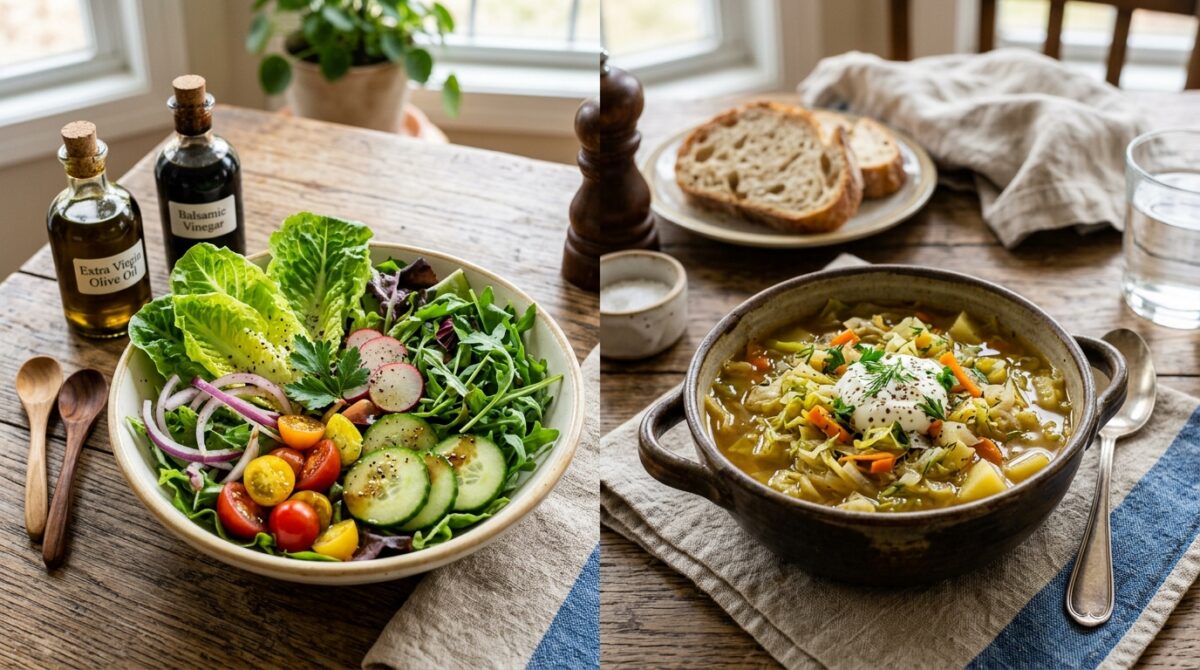
For a first step, I would suggest simply swapping out your normal dinner with either a big green salad or a big bowl of cabb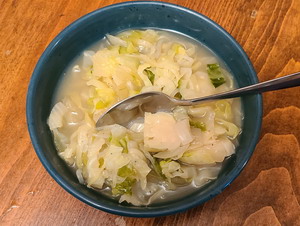 age soup a couple of times a week. The main thing you are trying to do is extend your normal dinner to breakfast time fasting period from 12 hours to 18 hours by having your dinner mimic fasting. So if you normally have your breakfast at 7 or 8 am and your lunch at 12 or 1 pm, then you are able to have an 18 hour break from consuming any foods that require digestion (proteins or carbs). ( The little amount of fat in the salad or soup only needs to be emulsified by your bile. No chemical breakdown needs to happen.) Once you become comfortable doing this, you can level up to swapping out all your meals in one day each week with the soup and salad.
For 30 years, it was my normal discipline to water fast from Thursday night to Saturday morning. This was more  for consciousness development than for health, but my body benefited nonetheless. For body health, I would engage in longer fasts – three days to two weeks. However, a few years ago I found out that while most of my body benefited from these practices, my gut paid a price. It seems that when you water fast for more than a day, the gut bacteria, hungry for something to eat, start munching on the lining of the gut. This creates leaky gut. And leaky gut then resulted in me developing all sorts of food sensitivities. Any food I ate more than once every four days, I would end up reacting to. At one point, I was doing blood testing for food allergies every few months. Each time I would show up allergic to 30 to 40 foods. I would avoid those foods and retest three months later and end up allergic to a new different 30 to 40 foods – the stuff I had been eating for the last three months! That is a sure sign of a leaky gut.
So now, when I fast for health, I am careful to keep f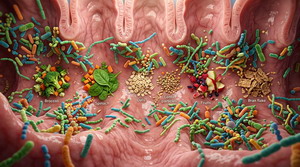 eeding the gut bacteria what they need to be healthy – fiber. Good guy gut bacteria thrive best on soluble fibers like pectin, glucomannan, inulin, and different gums like guar gum. To really support the bacteria you want the most, you also want to eat foods that are high in polyphenols, like the ones in green tea, coffee, berries, cacao, and certain extra virgin olive oils. These not only help select for the bacteria you want the most, but the metabolites the bacteria make from these polyphenols do wonderful things for our brain cells and body. That is why I will include a handful of blackberries or blueberries a couple of times a day while fasting, as well as drink green tea (or take green tea extract capsules). This is also why I will use the Moroccan olive oil/ grass fed butter blend on the Carbonaut fiber bread, or on flax/psyllium crackers I make.
My base cabbage soup recipe: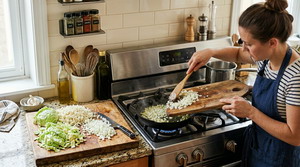
Sauté 1 diced medium onion in olive oil.
Add ½ of a chopped-up cabbage.
Add 1-2 cups of chopped Brussels sprouts or cauliflower.
Add 1 quart of organic bone broth or stock.
Add whatever herbs you prefer for flavor.
Simmer for 1 hour.
Why do I recommend cabbage soup? First, cabbage and bone broth are both excellent for healing the gut. Cabba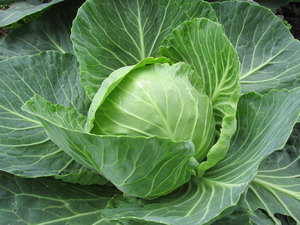 ge does not have the carbs that squash or root veggies have. Cabbage does not have the issues with lectins, oxalates, or phytates that spinach and some of the other greens have. However, if you wanted to clean out your liver, you could add some dandelion or beet tops to the soup. Parsley, cilantro, endive, and garlic likewise have significant health benefits and would make good additions to the soup. Sometimes I will also add Asian radish, jicama, and turnip to my soup to mix things up a bit. I will also play with fish sauce, coconut aminos, flavored vinegars, and red pepper sauce for zing. Soups are meant to be creative adventures that fit your personal tastes.
For salads, I find it easy to simply buy a bagged salad and toss out the good stuff in the little bags inside. I just use the greens in whatever mix it comes in. Sometimes I will use the d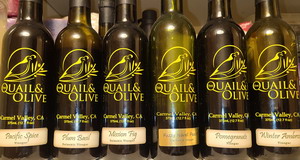 ressing inside if I am in a hurry, but I prefer to use Olive oil and vinegar with salt and pepper, or a very light dressing I invented while trying to duplicate the taste of Thai dipping sauce. This recipe calls for vinegar, and apple cider vinegar is a common option, but I prefer plum vinegar or one of my various flavored vinegars.
Here is that recipe:
1 cup water
¼ cup vinegar
1 Tbs. Fish Sauce
A few drops of stevia liquid
A few drops of hot sauce
If you really want to boost the nutrition with this salad dressing and make it more creamy, I would add 2 to 3 tablespoons of tahini (creamed sesame seed) to it. Tahini lowers inflammation, improves hormones, fights heart disease, helps regulate blood sugar, and supplies many powerful nutrients like calcium and zinc.
For the fiber portion of the fiber fast, I use Carbonaut bread, 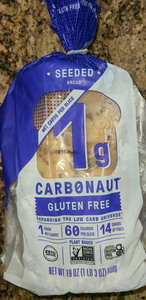 which I find in the freezer section at Raley’s. I also make little puffy soft crackers from flax meal and psyllium husk.
Here is that recipe:
1 1/2 cups of golden flax meal
¼ cup psyllium seed husk
¼ cup nutritional yeast
1 tsp Balanced salt
1 cup very hot water
Blend all the dry ingredients and add the hot water all at once, and mix thoroughly. This should form an elastic ball. R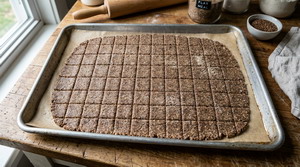 oll this out between a sheet of baking paper and plastic wrap to 1/8 inch thick. Remove plastic wrap. Place on a flat baking sheet. Sprinkle with garlic salt. Score the flat dough with a pizza cutter to form your crackers. Bake at 350 degrees for 30 minutes.
Serve with Labneh (see here) or olive butter (see he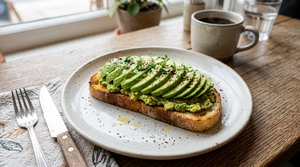 re). You can also make avocado Carbonaut toast with avocado oil mayonnaise and fresh avocado, as this is also high in fiber, low in carbs, and low in protein. (Normally, I am a big supporter of protein, but it blocks autophagy, so I choose to skip my protein occasionally.)
This should give you the tools to experiment with gr een fiber fasting. Start slow and gradually build up to longer periods. As I mentioned earlier, my usual pattern is to do weekly 60 hour green fiber fasts (Monday and Tuesday). That works out well with my workout schedule. But I would take many months to work up to this.
Life is an adventure. Aging is a pain in the posterior. This is a tool to fight some of that pain.
Take care,
David
Ellen
Well, we had the MRI scan – not a comfortable proceed ure. The table Ellen had to lay on was hard and she had to keep here hip in a painful position for a half an hour. Naturally this flared up the hip for the rest of the week. We have not talked to the doctor yet, but we saw the results on Friday. The muscles and ligaments are all good, but the hip joint bone was described as having bone rot (osteonecrosis). This does not sound good, but we will have to wait to speak with our GP to find out what to do about it.
|
Fructose possibly a trigger for anxiety Our modern diet contains 10 to 20 times more fruct ___________________________ “The essential cause of our feelings of aloneness is our need to have things be our way. We don’t want to connect to things that are different from us, but unfortunately everything is different from us.“
~David DeLapp _____________________________________ Choline fights diabetes/insulin resistance A common nutrient found in egg yolks, dairy, fish ____________________________ “Building memories requires feeling. So does rebuilding them. Just thinking about old traumas does nothing to change them. You must re-feel them from a new feeling place. “ ~David DeLapp ________________________________________ Semaglutide arthritis effect? Some interesting new research is showing that the G |