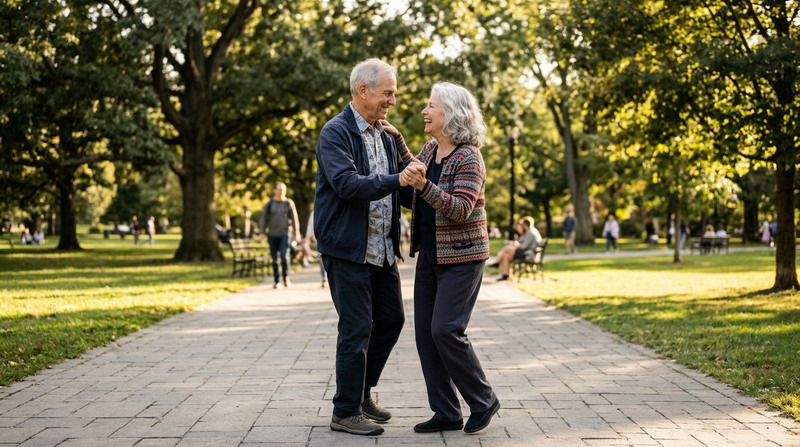
Many people find that their days grow calmer and less exciting with age. Part of this is natural. Psychological research  suggests that when we sense our time is limited, we lean toward what is familiar and meaningful and away from what is new and uncertain. That shift can bring real peace.
Part of it is how the brain works. Excitement is fueled  by surprise, by things turning out better or simply different than we expected. A new job, a new love, or a new city produces plenty of surprise. Decades of experience produce less, because we have learned what to expect.
Quiet is not the same as empty. You can feel at ease and still miss the spark you had when life was changing quickly. Both can be true. This article is about getting some of that spark back without giving up the calm.
Excitement follows action
Most of us assume we need to feel enthusiastic first and then act. Often it works the other way around. Research on motivation suggests that interest and energy usually grow out of doing something, not out of waiting for the mood to arrive.
Think back to a time when you were swept up in something new. You probably did not decide to feel excited. You found yourself in unfamiliar territory, and the excitement came as you engaged with it.
This means you do not have to produce the feeling on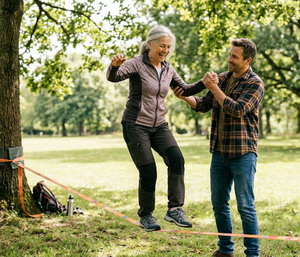 command. You only need to put yourself in a situation where the outcome is uncertain, then give it some time. The first few tries may feel flat. That is normal and does not mean it is not working. The feeling tends to build over weeks, as the unfamiliar becomes interesting.
Look for the unknown, not just more of the familiar
Learning is good for you, but there is a difference between learning a new skill and discovering something new about yourself. Skills pile up inside the person you already are. Self-discovery happens when you enter a situation where you do not know how you will respond, or where being seen might change how you see yourself.
In one well-known study, older adults spent sever al months learning demanding new skills, such as digital photography and quilting. Their memory improved more than that of people who stuck with familiar or purely social activities. The effort of stretching seemed to matter.
Some places that kind of stretch can live:
- Sharing something you have only ever kept private, in writing or in a talk.
- Creative work where you are a complete beginn
 er and the result might be bad.
- Letting someone younger, or differently skilled, teach you.
- Joining a group where nobody knows your history or your role.
Choose something with a little risk and a little uncertainty. Pure comfort rarely produces excitement.
Check the story you are telling yourself about aging
Accepting that life is finite is clear-eyed. Assuming that yo ur remaining years will be thin in experience is a different claim, and it may be something you absorbed rather than something you observed.
Research finds that people with positive views of aging tend to have better health and longer lives than those who expect decline. That does not prove attitude alone changes outcomes, but it suggests the story we tell about our later years is not neutral.
The numbers matter too. Many people in their seventi es have more than a decade ahead of them, and plenty live twenty years or more.
Try an experiment. Imagine you have twenty more years. What would you start now that you have been quietly putting off? The wishes that surface are worth paying attention to.
Nothing here asks you to deny real changes in he alth or energy, or the grief of losing people you love. Acceptance and appetite can live side by side.
Small ways to begin
You do not need a grand plan. Pick one idea and try it for a few weeks.
- Start before you feel ready. Show up first and let the interest catch up.
- Take a beginner’s seat. Join a class, a group, or an art form where you know nothing. Being a beginner again is a gift.
- Add a little stakes. A performance, a deadline, or an audience gives the effort some tension.
- Plan toward something. Put a date on a trip, a project, or a first class. Looking forward is part of the pleasu
 re.
- Spend time with people who are growing. Their energy is contagious. You can also be that person for someone else by teaching or mentoring.
- Enjoy warm company, and keep your own judgment. Encouraging people can lift you. Just check that what they offer is good for you, not only pleasant.
- Keep the calm. You are not trading peace for thrills. Excitement is easier to enjoy on a steady base.
When to ask for help
Feeling calm is different from feeling flat. If you have lost interest or pleasure in most things for more than a couple of weeks, or you are sleeping poorly, pulling away from people,  feeling hopeless, or thinking life is not worth living, please talk with your doctor or a counselor. These can be signs of depression or other treatable conditions, and they are not simply part of getting older.
If you are ever in crisis or thinking about harming yourself, call or text 988, the Suicide and Crisis Lifeline, at any hour.
The years ahead may hold more than you expect.  A first small step toward the unknown is often where the spark begins.
Take care,
My son Devon is visiting us, down from Vashon Island – west of Seattle. Here we are enjoying a lovely breakfast F riday morning before Devon and I went downtown to take in the Railroad Museum. Ellen had a client to see so she stayed home while us boys went off to play. I choose to do a charcuterie breakfast since I had picked up a gluten free baguette at the shop a few yards from the office.
|
|
Common risks for falling
Fear of falling is one of the biggest risks for falling. When you are afraid you avoid activities that you need to do to train your body to avoid falling. Hearing loss and urinary frequency are also under looked risks for falling.
More
___________________________
“Honesty – admitting that life is not all about you and you have no control over others, and most of the time no immediate control over your own feelings or desires. “
~David DeLapp
_____________________________________
Just 4 minutes of vigorous exercise per day significantly impacts prediabetes
Four one minute bouts of vigorous exercise has been found to significantly reduce blood sugar swings and steady blood sugar levels during the day. These bouts are being called exercise snacks.
More
____________________________
“Willingness – life shows us reflections of our true outflow to the world in the reactions of others and outcomes that flow from our actions. This is one way life loves us, by giving us the feedback we need to build better outcomes and a better us.“
~David DeLapp
________________________________________
Strategies for healthy aging
Physical exercise is one of the most powerful tools  for healthy aging. Couple this with a diet that supports you well, good sleep, metabolic health and staying connected and you have aformula for healthy aging.
More
________________________
“Perseverance – seeing our true self in the reflections from life is difficult. It takes a stubborn perseverance to hold on to those reflections and work with our inner perceptions and outflow until we get the reflections we want. “
~David DeLapp
|
|
|
|