I am noticing that a lot of my older patients are not g etting the exercise they need to keep their bodies going. These bodies are “use it or lose it” devices. Exercise is a non-negotiable concern if you want to age healthfully. However aging has some special considerations. Our joints and muscles are not what they were back in our 20s and 30s. Never-the-less, if you have arthritis or joint wear-and-tear, you can still build strength safely. This easy home program uses only your bodyweight and very slow movements to protect your joints while making muscles stronger. etting the exercise they need to keep their bodies going. These bodies are “use it or lose it” devices. Exercise is a non-negotiable concern if you want to age healthfully. However aging has some special considerations. Our joints and muscles are not what they were back in our 20s and 30s. Never-the-less, if you have arthritis or joint wear-and-tear, you can still build strength safely. This easy home program uses only your bodyweight and very slow movements to protect your joints while making muscles stronger.
Why this works for you:

Movements are super slow (especially the lowering part) to reduce stress on joints.
- Use about 60% effort — challenging but safe, with perfect form.
- No equipment needed (just a sturdy chair and a wall).
- Done 2–3 days a week, many people feel steadier and experience less pain over time.
Always check with your doctor before starting, and stop if you feel sharp pain (mild muscle tiredness is okay).
Quick Rules for Every Exercise
- Tempo: Lift or raise in 3 seconds (concentric / contraction phase) → Lower or return in 6–8 seconds (eccentric / extension phase — very slow and controlled).

- Breathing (very important for safety): Exhale during the quicker 3-second lifting/raising part. Inhale during the slower 6–8 second lowering part. Even though the slow lowering often feels like more effort, exhale on the lift and inhale on the lower. This keeps your blood pressure stable and prevents holding your breath, which is especially important for older adults.
- Do 2 sets of 8–10 repetitions per exercise or until the muscles fatigue and you are not able to do anymore with perfect form. Rest 60–90 seconds between sets.
- Move smoothly — no bouncing or jerking.
Warm-Up (5 minutes)
March gently in place (you can do this seated if easier) while making small arm circles. Add soft neck rolls and shoulder shrugs. This gets your blood flowing and joints ready.
Your 5 Easy Home Exercises
1. Sit-to-Stand (Chair Squat) Strengthens legs and hips to help with standing and walking.
- Sit near the front of a sturdy chair, feet flat and sh
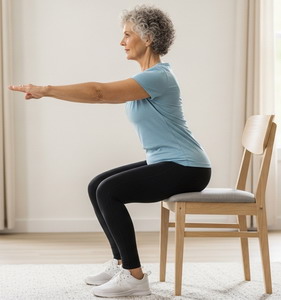 oulder-width apart, arms crossed or out for balance. oulder-width apart, arms crossed or out for balance.
- 3 seconds: Press through heels to stand tall (exhale).
- 6–8 seconds: Slowly lower back to the chair like you’re sitting on a soft pillow (inhale).
2. Wall Push-Up Gentle strength for chest, shoulders, and arms.
- Stand facing a wall, hands on the wall at shoulde
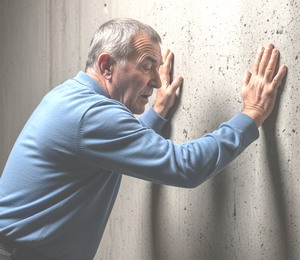 r height and a bit wider than shoulders. r height and a bit wider than shoulders.
- 3 seconds: Push away from the wall until arms are almost straight (exhale).
- 6–8 seconds: Slowly bend elbows to bring chest toward the wall (body stays straight) (inhale).
3. Glute Bridge Helps strengthen bottom, back of legs, and lower back for better hip and spine support. This exercise can be done in bed.
Lie on your back, knees bent, feet flat on the floor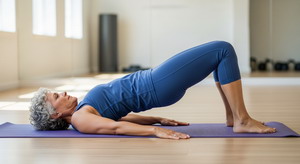 hip-width apart, arms at sides. hip-width apart, arms at sides.
3 seconds: Squeeze your bottom and lift hips up toward the ceiling (exhale).
6–8 seconds: Slowly lower hips back down, one vertebra at a time (inhale).
4. Seated Knee Lifts (New Core Exercise) Strengthens your deep abdominal muscles, improves posture, and supports your lower back — all while staying seated in a chair.

- Sit tall near the front edge of a sturdy chair, feet flat on the floor hip-width apart, hands resting lightly on your thighs or the sides of the chair for balance.
- Engage your core by gently drawing your belly button toward your spine (without holding your breath).
- 3 seconds: Slowly lift one knee a few inches toward your chest while keeping your back tall and straight (exhale).
- 6–8 seconds: Slowly lower the foot back to the floor with full control (inhale).
- Alternate legs. Keep the movement small and controlled — only lift as high as feels comfortable for your hips and back.
4a. Bird-Dog Improves balance, core strength, and
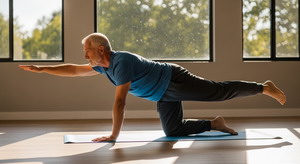 posture without stressing joints. If you are able to get up and down from the floor this is another good core exercise. posture without stressing joints. If you are able to get up and down from the floor this is another good core exercise.
- Start on hands and knees (or forearms if wrists bother you).
- 3 seconds: Slowly extend one arm forward and the opposite leg back, keeping hips level (exhale).
- 6–8 seconds: Slowly return to start (inhale). Alternate sides.
5. Toe Stand (Calf Raise) Strengthens calves and ankle
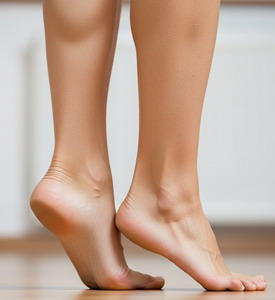 s for better balance. s for better balance.
- Stand behind a chair or near a wall for light support, feet hip-width.
- 3 seconds: Rise up onto your toes as high as feels comfortable (exhale).
- 6–8 seconds: Slowly lower heels back to the floor with control (inhale).
Cool-Down Stretches (5 minutes)
Hold each stretch gently for 20–30 seconds (no bounc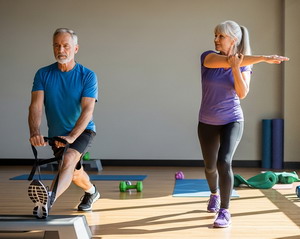 ing). ing).
Quad stretch (standing or seated)
Seated forward reach for hamstrings
Chest/shoulder opener (hands clasped behind back or against wall)
Gentle neck and upper back stretches
How to Get Started & Progress
- Week 1: Try 1 set of each exercise if needed.

- After 2–4 weeks: Add a 2nd set or slow the lowering phase to 8–10 seconds.
- Track your sessions in a notebook — you’ll see yourself getting stronger!
- Do this routine on non-consecutive days (example: Monday & Thursday).
- Pair with short daily walks on off days.
You’re taking a wonderful step for your health and independence. Small, consistent efforts like these can make everyday tasks easier and help protect your joints for years to come.
You’ve got this! Start slow, listen to your body, and celebrate every session.
If you have questions or need modifications for a specific joint, just ask me at your next visit.
Take care,
David
Ellen
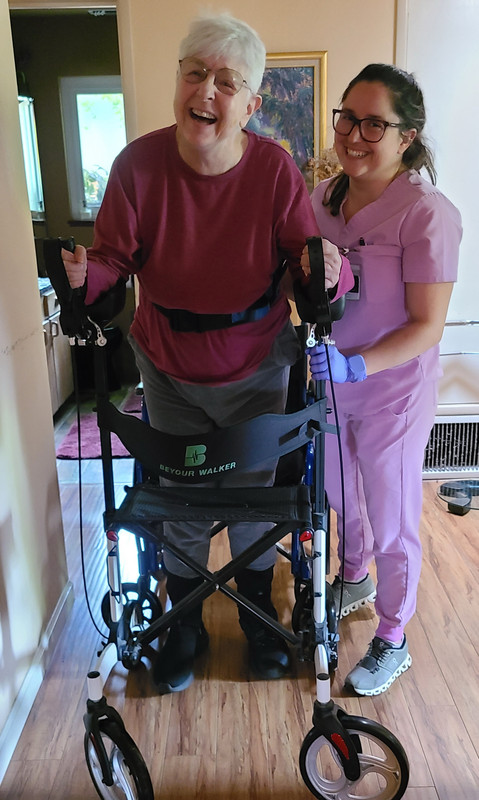
Today is Tax day and Ellen has her physical therapist here working with her. Ellen’s strength and coordination
backslide last week, but resolving some old emotional issues that were creating disharmony in her hip muscles this morning enable her to be able to use her standing walker once again.
Cardiovascular fitness preserves your brain
Recent research is showing that cardiovascular fitnes s improves the insulation around the nerves (the myelin). This protects the brain nerves from toxic insults and speeds the communication between the nerve cells. s improves the insulation around the nerves (the myelin). This protects the brain nerves from toxic insults and speeds the communication between the nerve cells.
More
___________________________
“To grow you have to feel. Feelings do the work of growth. Thinking exists to provide focus and direction for the feelings.“
~David DeLapp
_____________________________________
Exercise slows aging
Several recent studies have demonstrated that regular physical activity actually decreases the cellular markers of aging. Getting 150 minutes of moderate aerobic activity per week, like walking quickly, is one metric that has been found.
More
____________________________
“Respect is a reflection of how much you are valued as an equal provider for meeting someone’s needs. “
~David DeLapp
________________________________________
BCAAs increase the benefits of exercise
Using branched chain amino acids along with your  workouts produces almost a 50% better outcome with the exercise. The study focused on seniors and had them use 6 – 10 grams of BCAAs with exercise three times a week. workouts produces almost a 50% better outcome with the exercise. The study focused on seniors and had them use 6 – 10 grams of BCAAs with exercise three times a week.
More
________________________
“Even though it is socially appropriate, no one is actually entitled to be treated respectfully. Real respect is earned over time and with a great deal of positive interaction.“
~David DeLapp
|
|