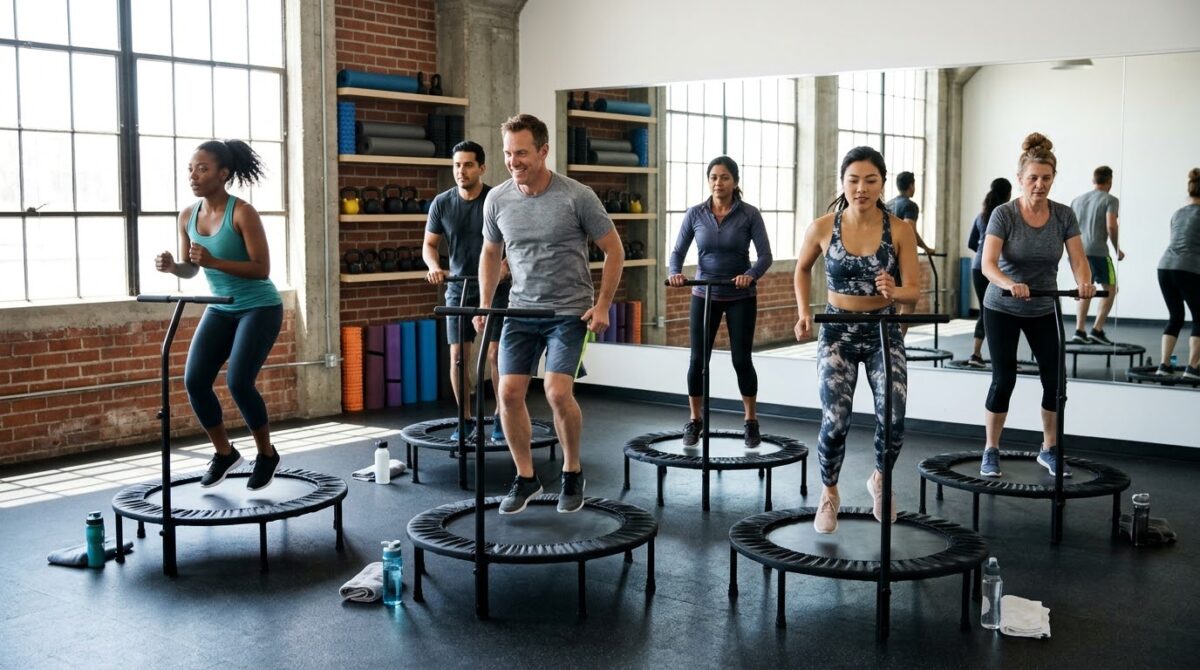
What is rebounding?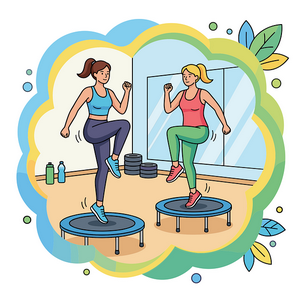 Rebounding means gentle bouncing on a small, springy trampoline, usually about three feet across. For mostpeople it is not high-flying jumping. It is a steady bounce, sometimes just rocking, marching, or shifting your weight, while holding a stability bar for support. Rebounding means gentle bouncing on a small, springy trampoline, usually about three feet across. For mostpeople it is not high-flying jumping. It is a steady bounce, sometimes just rocking, marching, or shifting your weight, while holding a stability bar for support.
Why we’re talking about it
Many of you walk outdoors to stay active. When  winter brings rain and early darkness, it’s easy to stop moving, and losing strength and balance over the winter makes falls more likely. Rebounding is one indoor option that may help you keep your legs strong and your balance sharp. Here is a great video on rebounding by a Chiropractor down in San Diego. winter brings rain and early darkness, it’s easy to stop moving, and losing strength and balance over the winter makes falls more likely. Rebounding is one indoor option that may help you keep your legs strong and your balance sharp. Here is a great video on rebounding by a Chiropractor down in San Diego.
What the research shows
Balance and recovering from a stumble.
In one study, adults averaging about 67 years old t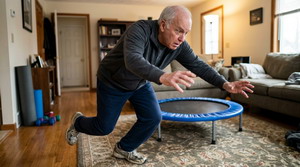 rained on a mini-trampoline for 14 weeks. Their ability to regain balance during a sudden forward fall improved by about 35%, and their calf muscle strength rose about 10%. The study was small, with 34 people. rained on a mini-trampoline for 14 weeks. Their ability to regain balance during a sudden forward fall improved by about 35%, and their calf muscle strength rose about 10%. The study was small, with 34 people.
Balance, strength, and confidence.
In a 12-week study of older women with low bone d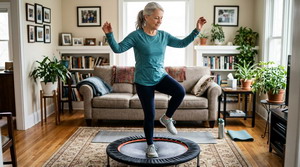 ensity, single-leg standing time improved by about a third in the trampoline group. The researchers concluded that the program improved balance, mobility, strength, walking, and fear of falling. Feeling less afraid of falling matters, because fear often makes people move less. ensity, single-leg standing time improved by about a third in the trampoline group. The researchers concluded that the program improved balance, mobility, strength, walking, and fear of falling. Feeling less afraid of falling matters, because fear often makes people move less.
Walking ability with neurological conditions. 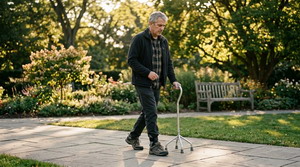
A review of studies in people with stroke, multiple sclerosis, Parkinson’s disease, and spinal cord injury found that rebound exercise significantly improved mobility, though it did not significantly improve balance. A smaller trial in Parkinson’s found improvements in balance, gait, and strength, but rebounding was not clearly better than doing similar exercises on solid ground.
It appears to be safe when done properly. In one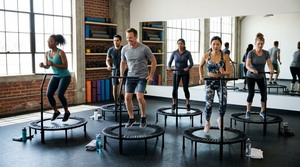 study of 53 adults with neurological conditions, no injuries or adverse events were reported. study of 53 adults with neurological conditions, no injuries or adverse events were reported.
Compared with walking.
In a 6-week study of adults averaging 71, both trampoline training and walking improved balance and walking capacity, but only the trampoline group improved single-leg balance.
What the research does not show
- It has not been proven to prevent falls. The studies measured balance and strength, not whether peo
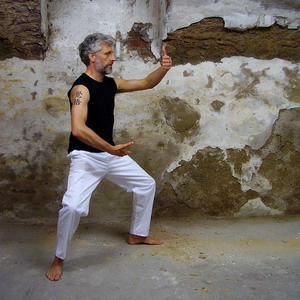 ple actually fell less often. By contrast, exercise programs in general have been shown to reduce falls in older adults, and programs like Tai Chi and the Otago Exercise Program have the strongest track records. ple actually fell less often. By contrast, exercise programs in general have been shown to reduce falls in older adults, and programs like Tai Chi and the Otago Exercise Program have the strongest track records.
- It is not clearly better than other exercise. Walking, balance exercises, and Tai Chi also work.
- Bone benefits are modest and uncertain. One small study found heel bone density improved in postmenopausal women, but reviewers say studies so far haven’t shown a convincing bone density benefit.
- There’s no good evidence for the claims you may see online, such as “detoxing” or boosting memory. The research hasn’t tested those.
- Most studies were small and short, and many used supervised programs.Is it right for you?
Rebounding is a good way to get your body moving indoors, but it isn’t for everyone. Talk to us before starting if you have significant balance problems, osteoporosis or a history of fractures, heart or blood pressure conditions, dizziness, vision problems, joint replacements, or memory difficulties.
If you try it
- Use a rebounder with a stability bar you can hold. The studies that used one did so for good reason.
- Start with supervision, or have someone nearby the first few sessions.
- Begin gently: just stand on it, shift your weight, then march in place. Bouncing both feet off the mat can come later, if at all.
- Keep your feet flat or lightly bouncing, and stop if you feel dizzy, short of breath, or in pain.
- Wear supportive shoes or non-slip socks, and clear space around the trampoline.
- Aim for short sessions, and build up gradually.
- Don’t count it as your only exercise. Pair it with leg-strengthening and balance exercises.
Rebounding is a reasonable, low-impact way to k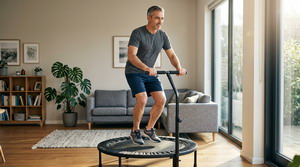 eep moving indoors this winter. Early research suggests it can help balance, leg strength, and confidence. It’s a promising option, not a cure or a guaranteed way to prevent falls. The best exercise is the one you’ll actually keep doing, safely. eep moving indoors this winter. Early research suggests it can help balance, leg strength, and confidence. It’s a promising option, not a cure or a guaranteed way to prevent falls. The best exercise is the one you’ll actually keep doing, safely.
Take care,
David
Many of you ask me how Ellen is doing, and I respond with some comment about how she works every day to rebuild the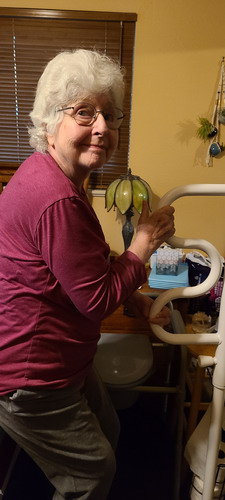 muscle strength she lost after being stuck in bed for 8 months. Here is one of her current exercises – standing up and down while holding on to her support pole. muscle strength she lost after being stuck in bed for 8 months. Here is one of her current exercises – standing up and down while holding on to her support pole.
|
|
Keto wins!
A just released study compared the keto diet, Mediterranean diet, and low fat plant-based diet to see how healthy they a re. The keto diet far outshined the other two for lowering cardiometabolic risk factors, blood sugar risk factors, and liver health risk factors. re. The keto diet far outshined the other two for lowering cardiometabolic risk factors, blood sugar risk factors, and liver health risk factors.
More
___________________________
“Addictions are any repetitive behaviors that stop us from feeling and participating with what is (reality) in an adaptive and respectful manner.“
~David DeLapp
_____________________________________
Parasites for allergies and autoimmune
Parasites like gut worms are being researched for calm ing down allergies and autoimmune diseases. These parasites secrete chemicals that calm down immune cells in order to keep our immune system from attacking the parasites. ing down allergies and autoimmune diseases. These parasites secrete chemicals that calm down immune cells in order to keep our immune system from attacking the parasites.
More
____________________________
“Our expectations both limit and define our outcomes.”
~David DeLapp
________________________________________
Start your carb meal with olive oil
Old wisdom is finally being recognized. Starting your meal with olive oil, like dipping your french bread in it, slows d own how rapidly the broken down carbs enter your bloodstream. This lowers your insulin levels and decreases your body storing those carbs as fat on your belly. own how rapidly the broken down carbs enter your bloodstream. This lowers your insulin levels and decreases your body storing those carbs as fat on your belly.
More
________________________
“If we truly were most important and always got our way, we would never develop the strength to even climb out of our strollers.“
~David DeLapp
|
|
|
 Rebounding means gentle bouncing on a small, springy trampoline, usually about three feet across. For mostpeople it is not high-flying jumping. It is a steady bounce, sometimes just rocking, marching, or shifting your weight, while holding a stability bar for support.