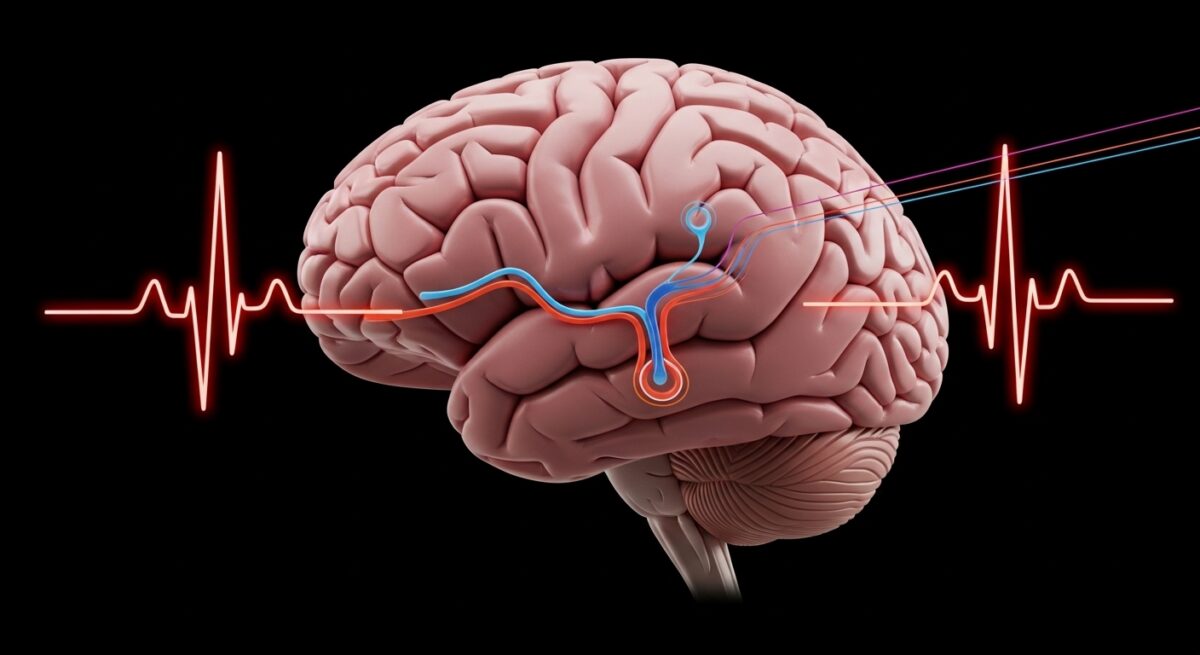
My Journey to Brainspotting:
The Mind-Body Connection
Hi, I am Amanda Titone, a Registered Associate Clinical Social Worker. I provide trauma-informed therapy in Roseville by utilizing a therapeutic modality called Brainspotting.
My interest in Brainspotting began long before I had ever heard of the term. When I was ten years old, I participated i n my first Tony Robbins firewalk. I remember stepping onto the hot coals expecting pain and instead feeling absolutely nothing. I was so certain it must have been a trick that I walked across again just to be sure. At that age, the experience felt almost magical, but what stayed with me was a deep sense of awe at how powerful the connection between the mind and body could be.
Years later, that early experience began to make more sense as I entered therapeutic practice. Through my work wit h clients, I consistently observed how emotions are not only felt psychologically but are also stored and expressed physically in the body. That same mind-body connection I witnessed on the firewalk seemed to show up repeatedly in the therapy room.
Where Trauma Lives
If you’re unsure about the connection between the m ind and body, take a moment to think about one of your greatest fears and notice any physical sensations that arise. This kind of bodily response is what first caught the attention of David Grand, the founder of Brainspotting, who observed a relationship between eye position and visible physical changes in the body. Over time, he noticed that people often had more awareness of these sensations than he initially expected.
What I came to understand through my training is  that trauma primarily affects the autonomic nervous system and the subcortical brain regions responsible for survival. These systems control breathing, heart rate, muscle tone, digestion, and energy use—all operating automatically without requiring conscious thought. These brain areas are designed to keep us alive, not to reflect or make meaning of our experiences. They’re constantly scanning the environment for cues of safety or threat and adjusting accordingly.
When a threat is overwhelming or prolonged, the ne rvous system learns to stay in this heightened state. Even when someone is safe, their body continues to react as if danger could return at any moment. The nervous system is not time bound like the conscious brain is—it responds based on patterns and association. This is why many trauma-related symptoms are often physical rather than cognitive.
Why Talking Isn’t Always Enough

Through my work, I began to notice a pattern: clients would gain insight into their trauma, understand it intellectually, and yet still feel hijacked by bodily reactions they couldn’t control. This made sense once I learned that insight exists solely in the conscious parts of our brain, while trauma responses are primarily in the subconscious. Subcortical systems don’t process language; instead they control sensation, movement, and visual input.
Those survival mechanisms—fight, flight, freeze—aren’ t irrational when they appear in response to non-threatening situations. They’re automatic reflexes that were shaped by past experiences. These responses once served an important purpose, even though they’re no longer working to keep someone safe. I realized that to change these leftover reactions, treatment had to engage the nervous system where they’re actually stored.
How Brainspotting Works
Brainspotting is a therapeutic approach designed to support subcortical, or “bottom-up,” processing of experiences, emotions, and relational patterns rooted in survival responses that no longer serve the individual. Rather than relying solely on verbal processing, it engages the brain and body together by focusing on areas associated with emotional distress, trauma, or behavioral patterns shaped by fight, flight, or freeze responses over time.
The visual system is one of the fastest pathways to the nervous system. It’s directly connected to the subcortical brain regions involved in emotional processing, arousal, and memory. This is why visual input influences heart rate, muscle tone, and emotional intensity. Specific eye positions are associated with increased activation or intensity tied to a previous experience, pattern, or emotional response. The nervous system recognizes this even when the conscious mind does not.
The process begins by identifying an activation that can be felt in the body—such as tightness in the chest, numbness, a sense of heaviness, or a “blank” feeling—without requiring detailed verbal descriptions of past events. Rather than analyzing or rehashing the trauma, this treatment is rooted in a curious exploration of what the body is doing in the present moment. This allows for healing to occur without needing to access the thinking mind.
What the Research Shows
As my interest in Brainspotting grew, I became curiou s about what the existing research might reveal about how this approach interacts with the brain and body. While the research is still emerging, early studies suggest that Brainspotting may be associated with changes in emotional experience and bodily processes.
One small study using brain imaging looked at individuals with PTSD before and after Brainspotting sessions. Researc hers found that as people’s symptoms improved, there were also changes in how their brains were using glucose for energy. This suggested a potential relationship between the therapy and actual shifts in brain activity. Other preliminary research has found that people reported reduced distress following Brainspotting, with results that were comparable to other trauma-focused therapies. While more studies are needed to fully understand how and why Brainspotting works, these early findings offer encouraging signs that this approach may help create real, measurable change in both the brain and body.
My Brainspotting Experience
I was able to experience Brainspotting as a client during my training, and it left a lasting impression. I began feeli ng frustrated and irritated by a friend’s behavior and quickly became overwhelmed with sensations of loss, sadness, and loneliness related to their recent absence from my life. The session lasted over an hour, and I was struck by how many layers existed beneath the surface. I moved through cycles of intense emotion that caused me to cry and experience strong sensations in my body, followed by periods of calm and thoughts such as, “That was probably all of it,” or “Maybe we should be wrapping up soon.”
What surprised me most was discovering additional layers of grief and loss that traced back to the sudden death of a close friend in 2011. I had been certain that I had already processed that loss completely and could remember him without sadness. To find that focusing on one spot in my visual field had uncovered this was unexpected, but the connection also made sense. The situations we experience in life affect us whether they are in our conscious awareness or not. After that experience, I became incredibly motivated to continue this work with my clients and provide a different type of processing than I was able to do with talk therapy alone.
If you are interested in learning more, or curious if you wo uld be a good fit for this treatment, please reach out for a free 15 minute consultation. 530-444-8880 or visit my website at amandatitonetherapy.com/brainspotting-therapy
Ellen
Today is Valentine’s day. I wanted to do something special for Ellen. Her old iPhone 8 has not been able to load some programs due to its age so I thought an upgrade might be in order. I happened to mention my thoughts to Holly, one of  my patients, and she then asked me if I was getting Ellen a new iPhone 17. I said there was no way I would pay that much for a phone, so offered me her retired iPhone 11 as an upgrade. She said she was wanting a new home for her old phone. I said yes and here we are on Valentine’s day with a newer phone in hand nestled in its fancy red leather carrying case.
Yoga pants can cause infertility?
It sounds insane, but real research is discovering that the use of synthetic fabrics in undergarments can cause a temporary loss of sperm function in men and transfer endocrine disrupting chemicals to women.
___________________________
~David DeLapp
_____________________________________

Comparing sugar loads for various beverages, grape juice came in at the highest – 14.4 grams per 100ml of drink. Monster Energy was next with 11.4 grams/100ml. Once more, being a natural source does not make it good for you.
____________________________
“Growth comes from desire while fear and anger only produces inhibition. You have to want something more to be motivated to embrace/risk the unknown and develop new skills. Fear is a pushing away/down energy.“
~David DeLapp
________________________________________
TMJ has many possible causes
The linked article looks at some of the many causes of  TMJ pain. It covers arthritis, trauma, fibromyalgia, dental issues, and stress and tension.
________________________
“No one grows from a state of judgment. Feeling judged by self or others shuts you down and makes you defensive – not a place you can grow from.“
~David DeLapp