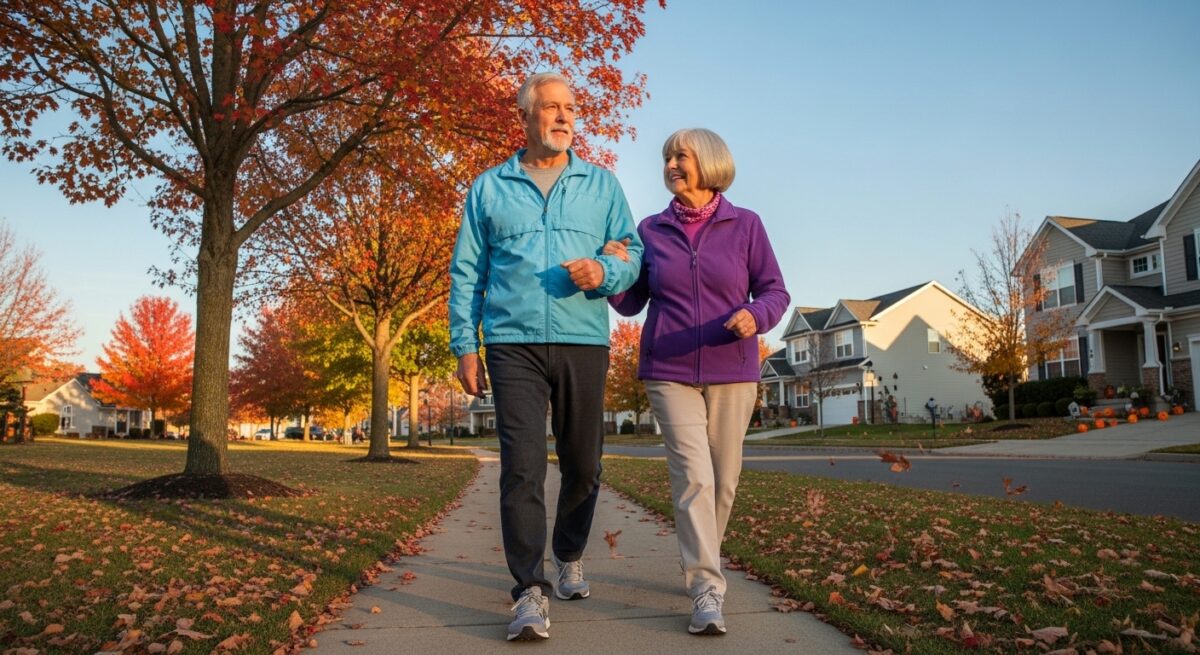
When it comes to exercise, many of us think we ne ed to go big — hit the gym hard, run for miles, or sign up for an intense fitness class. But what if one of the most powerful things you can do for your health is also the simplest? Research consistently shows that walking — yes, ordinary walking — delivers remarkable health benefits. Here’s what the science says, and how to get the most out of every step.
Why Walking Is So Good for You
 The evidence for walking’s health benefits is wide-ranging and well-established. Here are some of the key areas where regular walking makes a real difference:
- Your heart and circulation: Walking lowers blood pressure, improves cholesterol levels, and reduces your ris
 k of heart disease and stroke.
 - Blood sugar control: Regular walking improves insulin sensitivity and helps keep blood sugar stable — important for reducing the risk of type 2 diabetes.
- Mental health: Walking has been shown to reduce symptoms of depression and anxiety, improve mood, and lower stress hormones. Walking in nature appears to have an even stronger effect.
- Brain health: Studies link regular walking to slower cognitive decline as we age and a reduced risk of dementia. It actually promotes growth in the part of the brain involved in memory.
- Bones and joints: Walking strengthens bones, supports joint health, and helps prevent falls in older adults by improving balance and leg strength.
- Longevity: People who walk regularly have significantly lower rates of early death from all causes. Even reaching around 7,000–8,000 steps a day is associated wi
 th meaningful reductions in mortality risk.
The good news is that you don’t need to walk enormous distances to see these benefits. Going from being completely inactive to walking 30 minutes most days produces large health gains — and benefits begin almost immediately.
Interval Walking: Get More from Every Walk
Have you heard of HIIT — high-intensity interval trai ning? It turns out the same principle works brilliantly for walking, and research shows it can produce even better results than walking at a steady, comfortable pace.
The idea is simple: instead of walking at one consistent  speed, you alternate between periods of brisk, effortful walking and slower recovery walking. A common approach is 3 minutes fast, 3 minutes slow, repeated five times for a 30-minute workout.
“Fast” here doesn’t mean jogging — it means walking as briskly as you can, to the point where conversation becomes a little difficult. Studies comparing interval walking against steady-pace walking (with the same total time and distance) found that interval walkers showed greater improvements in cardiovascular fitness, leg strength, blood pressure, and metabolic health markers.
Not comfortable with speed? Try these variations:
- Walk uphill or on a treadmill incline to increase i
 ntensity without going faster.
 - Wear a light-weighted vest to add extra effort at the same pace.
- Alternate stair climbing with flat walking for natural intervals.
Interval walking is particularly well-suited to people who can’t or prefer not to run — including older adults, those with joint issues, or anyone returning from injury — because it delivers a stronger training effect while keeping the impact on your body low.
You Don’t Have to Do It All at Once
One of the most liberating findings from walking r esearch is this: you don’t need to fit all your walking into a single session to get the benefits. Breaking your walking into 2 or 3 shorter bouts throughout the day is just as effective as one longer walk — as long as the total time adds up. Many of my patients use a treadmill or stationary bike while working at home to create sweet little 10 minute exercise breaks throughout the day.
Multiple studies have directly compared a single 30 -minute walk against three 10-minute walks, and found similar improvements in blood pressure, cardiovascular fitness, cholesterol, and blood sugar. What matters most is your total steps and total active minutes across the day.
Tip: Short walks after meals may actually be better for blood sugar than one long walk.
Even a 10–15 minute walk after breakfast, lunch, or dinner can significantly blunt the rise in blood sugar that follows eating. If blood sugar management is a priority for you, this is an especially powerful habit to build.
There is one caveat worth noting: very short bursts of under five minutes may contribute a little less per minute than bouts of 10 minutes or more. But anything over 10 minutes appears fully effective — so three 10-minute walks gives you essentially the same return as a single 30-minute one.
There’s also an independent benefit to breaking up long periods of sitting. Prolonged uninterrupted sitting appears to be harmful to your metabolism even if you exercise at other points in the day. Getting up for a short walk every hour or two isn’t just good for your step count — it actively counters the effects of sitting.
Practical Tips to Get Started
- Start small and build gradually. Even 10 minutes a day is a meaningful starting point if you’re currently inactive.
- Use your schedule creatively. A walk before work, a 10-minute lunchtime stroll, and an evening walk after dinner add up to 30+ minutes without needing a dedicated time slot.
- Pick up the pace occasionally. You don’t need a formal interval program — even weaving a few minutes of faster walking into your usual route boosts the benefit.
- Walk after meals. Even a gentle 10-minute walk after eating is one of the most effective things you can do for blood sugar regulation.
- Go outside when you can. Walking in green spaces or natural settings appears to amplify the mental health benefits beyond what indoor or urban walking provides.
Walking is not a compromise — it’s one of the most 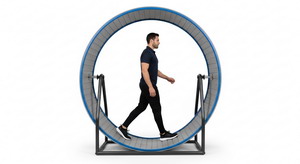 evidence-backed, sustainable, and accessible forms of exercise available. Whether you do it all at once or in small doses, at a steady pace or with bursts of effort, the research is clear: every step counts.
Take care,
David
Ellen
Ellen has been working on her stamina sitting in the wheelchair. She can last 90 minutes at this point. That is enough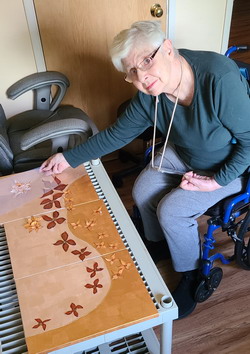 time that she was able to actually get into her art room for the first time in almost 3 months. Here is a project she started before Christmas.
Matcha for allergies?

Matcha tea appears to greatly reduce the need to sneeze, without affecting the immune system…at least in mice. Seems easy to try.
___________________________
~David DeLapp
_____________________________________
In a side-by-side comparison with nicotine patches,  a single dose of psilocybin had 6X the effectiveness at keeping people from smoking after 6 months compared to daily nicotine patches. Both groups got weekly therapy.
____________________________
“Openness is essential for growth. Without openness to what is we learn nothing. Growth is a constant incorporation of non-self into self.“
~David DeLapp
________________________________________
Gut inflammation drives age associated memory loss
As we get older the types of bacteria in our gut change s, and certain molecules the old gut bugs produce increase inflammatory molecules that interfere with proper memory formation. Switching out these old gut bugs with young ones reversed this memory loss.
________________________
“The principle of tolerance and patience. Have your opinions, feelings, and beliefs, but allow all others to have their opinions, feelings, and beliefs.“
~David DeLapp