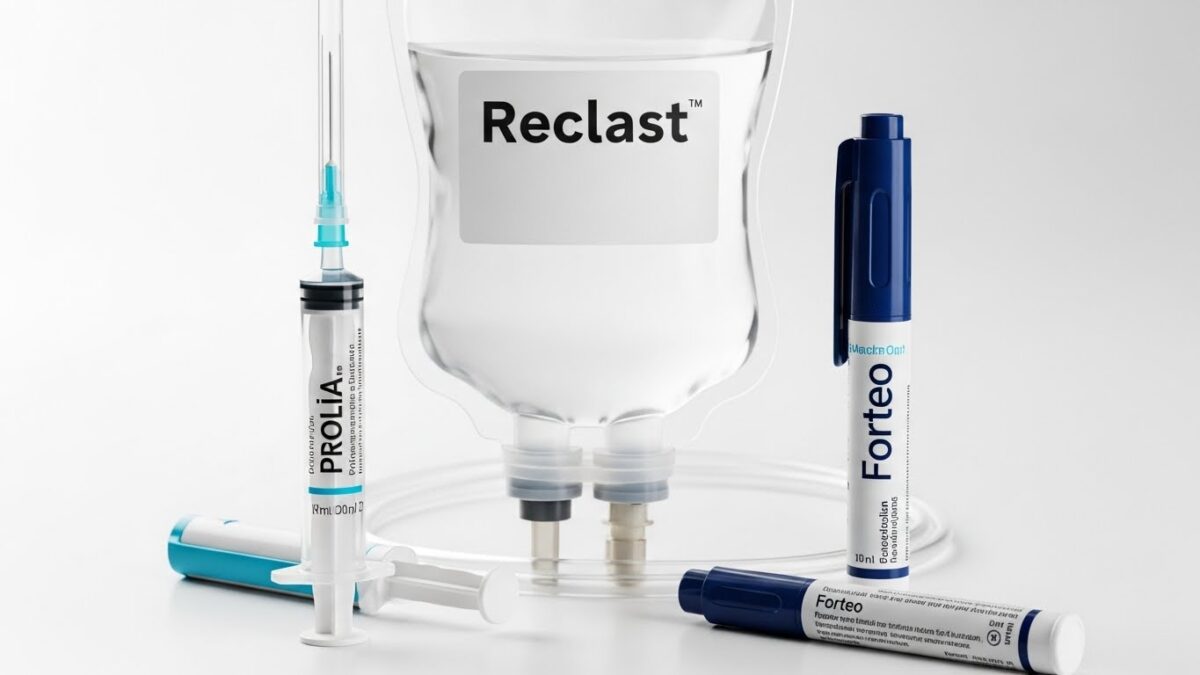
If you’ve been prescribed medication for osteoporosis, you’re likely familiar with bisphosphonates like Fosamax (alendronate) or Reclast (zoledronic acid). These medications are hig hly effective at reducing fracture risk, but emerging research suggests they may have an important metabolic side effect that deserves your attention: depletion of Coenzyme Q10 (CoQ10), a vital compound your cells need for energy production.
How Bisphosphonates Work
Bisphosphonates protect your bones by targeting oste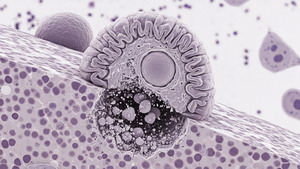 oclasts, the cells responsible for breaking down bone tissue. In osteoporosis, osteoclasts break down bone faster than osteoblasts can rebuild it, leading to weakened bones and increased fracture risk.
These medications work by inhibiting a cellular pathway called the mevalonate pathway. Specifically, they block an enzyme which prevents the production of compounds needed for protein attachment. Without this attachment, critical proteins in osteoclasts can’t function properly, ultimately causing these bone-resorbing cells to die. This slows bone breakdown and allows bone density to improve.
The effectiveness is impressive. Oral alendronate reduc es vertebral fractures by 48% and hip fractures by 53% in women with existing fractures. IV zoledronic acid is even more potent, reducing vertebral fractures by approximately 70% and hip fractures by 35-40%.
The Unintended Consequence: CoQ10 Depletion
Here’s the critical issue that often goes unaddressed: the mevalonate pathway that bisphosphonates inhibit isn’t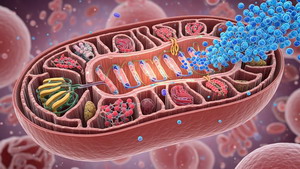 only important in osteoclasts. This same pathway is active in virtually every cell in your body, where it produces not just the attachment compounds but also Coenzyme Q10.
CoQ10 is essential for mitochondrial energy production and serves as a powerful antioxidant. Research shows that bisphosphonates can cause a 30-50% decrease in total cellular CoQ10 levels and completely eliminate the reduced form (CoQ10H2) that functions as an antioxidant. This depletion affects multiple tissues including muscle cells, endothelial cells lining blood vessels, and other organs throughout your body.
The potential consequences of CoQ10 depletion includ e muscle weakness and pain, reduced exercise tolerance, impaired cardiovascular function, and increased oxidative stress in tissues. These effects may explain some of the muscle and joint pain that patients commonly experience with bisphosphonate therapy.
Oral vs. IV Bisphosphonates: An Important Difference
If you’re concerned about systemic CoQ10 depletion, t he form of bisphosphonate you take matters significantly.
Oral alendronate (Fosamax) has extremely poor absorption, with only 0.6-1% of the dose entering your bloodstream. The rest passes through your digestive system without being absorbed. Of the small amount that is absorbed, approximately half binds directly to bone tissue while the remainder is quickly excreted by your kidneys. This means systemic exposure to non-skeletal tissues is quite low.
In contrast, IV zoledronic acid (Reclast) has 100% bioava ilability since it’s injected directly into your bloodstream. While it rapidly binds to bone (within 24 hours, plasma concentrations drop to less than 1% of peak levels), that initial exposure to all tissues is much higher. Additionally, zoledronic acid is approximately 100 times more potent than alendronate at inhibiting the mevalonate pathway.
The trade-off is convenience and effectiveness. Reclast offers the advantage of once-yearly dosing (compared to weekly pills) and slightly better fracture reduction, but comes with greater systemic metabolic impact.
A Potential Solution: Geranylgeraniol Supplementation
This is where the science gets interesting. Researche rs have discovered that supplementing with geranylgeraniol (GGOH), a precursor compound in the mevalonate pathway, may help restore CoQ10 production in tissues throughout your body without interfering with the bone-protective effects of bisphosphonates.
The theory is elegant: because osteoclasts are directly exposed to very high concentrations of bisphosphonates at bone surfaces where they’re actively working, they remain suppressed even with GGOH supplementation. Meanwhile, other tissues in your body, which experience much lower drug exposure, can use the supplemental GGOH to restore their ability to produce CoQ10 and other essential compounds.
Most of the research on GGOH supplementation has focused on statin drugs, which also inhibit the mevalonate pathway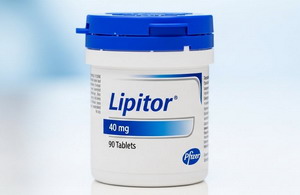 . Studies show that GGOH completely reverses statin-induced muscle fatigue and weakness without interfering with cholesterol-lowering effects. In fact, GGOH appears more effective than direct CoQ10 supplementation for addressing these symptoms, likely because it provides the upstream building block that cells can use to make CoQ10 themselves.
Animal studies suggest a human-equivalent dose of approximately 170-300 mg daily of GGOH, though comm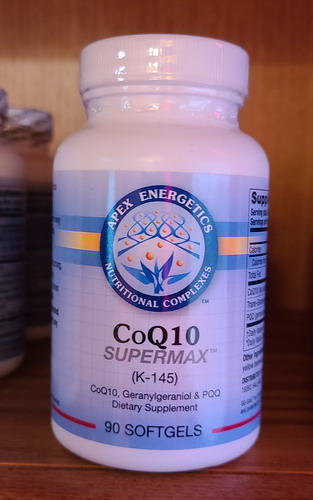 ercial supplements typically provide 150-300 mg per serving. For CoQ10 supplementation, doses of 200-400 mg daily of the ubiquinol form (the reduced, more bioavailable form) would be reasonable. We carry such a supplement with both GGOH and ubiquinol in the office – CoQ10 SuperMax.
The Critical Research Gap
Here’s the honest truth: while the biochemical logic is  sound and the research with statins is promising, no clinical studies have specifically tested CoQ10 or GGOH supplementation in bisphosphonate users. This represents an urgent need for research, particularly given how commonly these osteoporosis medications are prescribed.
Alternative Treatments Without Mevalonate Pathway Effects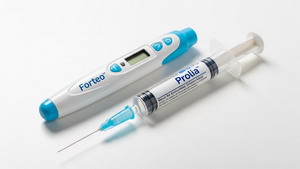
If you’re concerned about the metabolic impact of bisphosphonates, you have options that work through entirely different mechanisms:
Denosumab (Prolia) is a monoclonal antibody given as an injection every six months. It works by blocking RANKL, a protein that activates osteoclasts, without affecting the mevalonate pathway at all. It’s highly effective, reducing vertebral fractures by 68%, nonvertebral fractures by 20%, and hip fractures by 40%. The main consideration is that stopping denosumab causes rapid bone loss, so it requires long-term commitment.
Anabolic agents like teriparatide (Forteo) or romosozumab (Evenity) actually stimulate new bone formation rather than just preventing breakdown. These are typically used for one to two years in high-risk patients, then followed by a maintenance medication. They also don’t affect the mevalonate pathway.
Understanding Drug Holidays
One advantage of bisphosphonates is their remarka bly long duration of action. Because they bind so tightly to bone tissue, a single dose of zoledronic acid continues suppressing bone resorption for years. After three years of annual infusions, bone density remains stable for at least three additional years without treatment.
This property allows for “drug holidays” where treatment is paused, particularly in lower-risk patients. During these breaks, the mevalonate pathway in non-skeletal tissues can recover and restore normal CoQ10 production, while bone remains protected by previously administered medication.
Making an Informed Decision
The choice of osteoporosis treatment involves balancing multiple factors: effectiveness, convenience, side effects, cost, and now, metabolic impact. Here are key questions to discuss with your healthcare provider:
What is your fracture risk level? Higher-risk patients may need the most potent treatments regardless of other considerations.
Are you also taking a statin? If so, the cumulative eff ect on the mevalonate pathway strengthens the case for GGOH supplementation.
Would you prefer oral or IV bisphosphonates? If concerned about systemic effects, oral alendronate may offer a better balance.
Are you a candidate for denosumab or anabolic agents? These avoid mevalonate pathway issues entirely.
Should you consider CoQ10 or GGOH supplementation? While not yet standard of care, the biochemical rationale is strong, particularly for long-term bisphosphonate users.
The Bottom Line
Bisphosphonates remain highly effective medications for preventing osteoporotic fractures, and for many patients, the benefits clearly outweigh the risks. However, the emerging understanding of their effect on CoQ10 production adds an important dimension to treatment decisions.
If you’re currently taking bisphosphonates and experi encing unexplained muscle pain, weakness, or fatigue, discussing CoQ10 or GGOH supplementation with your physician may be worthwhile. These supplements are generally safe and may address symptoms that are otherwise difficult to explain.
As with all medical decisions, work closely with your healthcare provider to find the approach that best balances bone protection with overall health and quality of life. The field of osteoporosis treatment continues to evolve, and staying informed helps you participate actively in decisions about your care.
Office party time! We had our holiday party at Mystique dinner theater for a bit of magic with our 5 course meal! At the time I set up the party I had no idea that Dec 7th was the date of the California International Marathon and with it the Folsom holiday street fair. As we discovered when we tried to reach the theater on Sutter street, the whole area was blocked off and every parking spot was filled for blocks around. Fortunately, as we cruised up Riley street, someone pulled out giving us a place to park that was only a block and a half away. Good times!
Our gut bugs fight diabetes with this nutrient

Carbs are not the only cause of diabetes – high fat diets trigger an inflammation cascade that produces insulin resistance, the underlying cause of diabetes. New research has shown that choline (found in eggs, dairy, beef, fatty fish) gets turned into TMA which blocks this process.
More
___________________________
“People are driven, compelled subconsciously to recreate and repeat past traumatic or high drama experiences in an attempt to produce better results.“
~David DeLapp
_____________________________________
Green nutrition needs fat
Super green foods like kale have a weakness – the mo st important nutrients in green foods are carotenoids, which are only fat soluble, and therefore need fat to be absorbed. Eating greens raw or cooked shows very little nutrient absorption, but when they are consumed along with fats the absorption goes way up. st important nutrients in green foods are carotenoids, which are only fat soluble, and therefore need fat to be absorbed. Eating greens raw or cooked shows very little nutrient absorption, but when they are consumed along with fats the absorption goes way up.
More
____________________________
“Attraction is based on our subconscious aligning with the other person in playing out a pattern that recreates old relationships that were unsatisfactory. We attempt to “win” at getting “our way” this time around.“
~David DeLapp
________________________________________
NAD+ for memory
Everyone is looking for the miracle drug that will defeat Alzheimer’s. So far they have failed miserably. But a sim ple nutritional supplement is showing some real promise – NAD+. This stuff appears to correct RNA splicing errors. RNA is how the DNA tells the rest of the cell to do everything. We can boost our NAD+ by taking nicotinamide riboside or nicotinamide mononucleotide. ple nutritional supplement is showing some real promise – NAD+. This stuff appears to correct RNA splicing errors. RNA is how the DNA tells the rest of the cell to do everything. We can boost our NAD+ by taking nicotinamide riboside or nicotinamide mononucleotide.
More
________________________
“Our heads can gather and organize data, but it is our feelings that allow us to prioritize that data.“
~David DeLapp
|
|